Frontal Fibrosing Alopecia: Complete Guide to Symptoms, Causes & Treatment (2026)
3,398 words·Compiled from cited medical literature·Not medical advice
On this page 13 sections
Who This Is For#
This guide is for you if:
- You've noticed your hairline gradually receding backward
- Your eyebrows have thinned or disappeared
- You've been diagnosed with FFA and want to understand your condition
- You're a postmenopausal woman experiencing hair changes
- You're concerned about a family member with these symptoms
This guide is NOT for you if:
- You have patchy hair loss in random spots (see our alopecia areata guide)
- You have general all-over thinning (see our androgenetic alopecia guide)
- You're experiencing sudden shedding after stress or illness (see our telogen effluvium guide)
What Is Frontal Fibrosing Alopecia?#
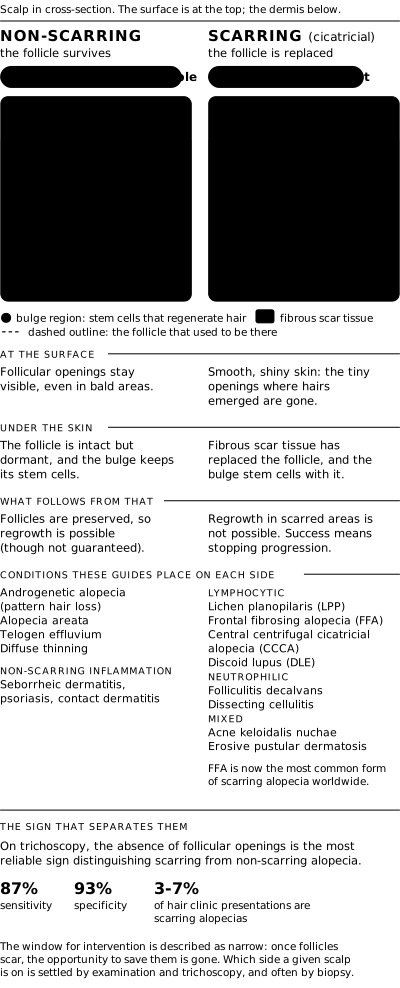
Frontal fibrosing alopecia is a form of primary cicatricial (scarring) alopecia that causes progressive recession of the frontotemporal hairline. Unlike non-scarring hair loss where follicles remain intact and regrowth is possible, FFA destroys hair follicles and replaces them with scar tissue, making hair loss in affected areas permanent.
First described by Australian dermatologist Steven Kossard in 1994, FFA was initially considered rare. Today, it represents the most common form of scarring alopecia diagnosed in dermatology clinics worldwide, with its incidence increasing dramatically over the past three decades.
FFA is classified as a variant of lichen planopilaris (LPP), a broader category of scarring alopecia. While LPP can affect any area of the scalp, FFA shows a distinctive pattern: a band-like recession of the frontal and temporal hairlines.
Why FFA Is Called "Scarring" Alopecia#
The term "scarring" in scarring alopecia describes what happens to the follicles, not necessarily what you see on the scalp surface. When FFA destroys a hair follicle, fibrous scar tissue fills the space where the follicle used to be. This isn't the raised, visible scarring you might imagine—it's microscopic replacement of living follicle structures with non-functional scar tissue. This distinction matters enormously: in non-scarring conditions like androgenetic alopecia, follicles remain alive even as they shrink, leaving the door open for regrowth. In FFA, once a follicle is replaced by scar tissue, it's gone forever. This is why early treatment is so critical—the goal is to save follicles before they're destroyed.
The Rising Epidemic#
FFA has gone from a medical rarity to the most common scarring alopecia diagnosis in a remarkably short time. Studies show:
- Prevalence: Approximately 0.015% in New York City; 0.15% in Spanish populations
- Incidence: Increasing rapidly across Europe, the United States, and Japan
- Recognition: Some increase may reflect better awareness among clinicians, but genuine increase in cases is suspected
This "epidemic" of FFA has prompted intense research into possible environmental triggers. The timing—FFA emerging as a distinct entity in 1994 and increasing steadily since—suggests something in the modern environment may be contributing.
The Environmental Hypothesis#
The dramatic rise of FFA has researchers searching for environmental culprits. Several factors have been investigated:
Facial skincare products: Studies have found associations between FFA and use of facial moisturizers, sunscreens containing UV filters, and certain cosmetics. A large case-control study found FFA was associated with exposure to formalin (OR 3.19), regular facial soap (OR 2.09), and facial cream (OR 1.99).
Hormonal factors: The predominance of postmenopausal women and associations with early menopause and hormone-related conditions suggest hormones play a role.
Genetic susceptibility: Twin studies and familial clustering confirm genetic predisposition, but genes alone don't explain the rising incidence.
The current working hypothesis is that FFA requires both genetic susceptibility and environmental triggers—but which triggers and through what mechanism remains unclear. Until we know more, patients often ask about skincare modifications, but no specific preventive measures are proven.
Who Gets FFA?#
Demographics#
FFA primarily affects:
- Women: 95%+ of cases
- Postmenopausal women: Typical onset around age 60
- Average age at diagnosis: 56 years
- Premenopausal women: Increasingly recognized (youngest case reported at age 21)
- Men: Rare but documented
Associated Conditions#
Studies have found FFA patients have higher rates of:
| Condition | In FFA Patients | General Population |
|---|---|---|
| Hypothyroidism | 15% | 4.2% |
| Early menopause | 14% | 6% |
| Androgenetic alopecia | 40% | Variable |
| Other autoimmune diseases | 55% (history) | Lower |
The Autoimmune Connection#
The strong association between FFA and autoimmune conditions—particularly thyroid disease—points to a broader pattern of immune dysregulation in affected individuals. This doesn't mean FFA is caused by thyroid disease; rather, the same genetic or environmental factors that predispose someone to FFA may also increase their risk for other autoimmune conditions. The immune system, for reasons not fully understood, is more likely to misrecognize and attack the body's own tissues. Understanding this connection matters for two reasons: first, FFA patients should be screened for thyroid dysfunction; second, it helps explain the mechanism—FFA is, at its core, an immune-mediated disease.
The Mechanism: How FFA Destroys Follicles#
Understanding how FFA works helps explain why treatment focuses on early intervention and why regrowth in affected areas is typically impossible.
The Immune Attack#
FFA results from an immune attack on a specific part of the hair follicle: the bulge region, which houses hair follicle stem cells. Here's the sequence:
- Immune privilege collapse: Normally, the bulge region has "immune privilege"—it's hidden from immune system surveillance. In FFA, this protection breaks down.
- T-cell attack: CD8+ T-lymphocytes infiltrate the bulge area and attack the stem cells that produce new hair.
- Stem cell destruction: The immune attack destroys or damages the epithelial hair follicle stem cells (eHFSCs).
- Epithelial-mesenchymal transition (EMT): Surviving stem cells undergo abnormal changes.
- Fibrosis: Scar tissue (fibrosis) gradually replaces the destroyed follicle structures.
- Permanent follicle loss: Once fully replaced by scar tissue, the follicle can never regenerate.
Why the Stem Cells Matter#
The bulge region of a hair follicle is like its bone marrow—it contains the stem cells that regenerate the hair during each growth cycle. In normal hair cycling, these stem cells wake up, multiply, and produce a new hair shaft. They're essential for the follicle's ability to regenerate. In FFA, these specific cells are targeted and destroyed. Without them, even if the rest of the follicle structure remained intact, no new hair could ever grow. This is fundamentally different from androgenetic alopecia, where follicles miniaturize but stem cells survive. The stem cell destruction in FFA is what makes it scarring and permanent.
Signs and Symptoms#
Hairline Changes#
The hallmark of FFA is progressive recession of the frontotemporal hairline, characterized by:
- Band-like recession: The hairline moves backward uniformly
- Smooth, pale skin: Affected areas appear featureless without visible hair openings
- Loss of vellus hairs: Tiny "baby hairs" at the hairline disappear
- "Lonely hairs": Occasionally, isolated hairs remain in otherwise bald areas
Eyebrow and Body Hair Loss#
A distinctive feature of FFA is loss of hair beyond the scalp:
- Eyebrows: Affected in 80-90% of patients
- Eyebrow loss often precedes scalp changes: Sometimes by months or years
- Eyelashes: May also thin or disappear
- Body hair: Underarm, pubic, and limb hair may be reduced
Associated Skin Changes#
Many FFA patients experience:
- Facial papules: Small skin-colored bumps on the face (non-inflamed follicles)
- Lichen planus pigmentosus: Darkened patches, especially in darker skin types
- Perifollicular erythema: Redness around hair follicles at the active edge
Why Eyebrows Matter#
The involvement of eyebrows in FFA is more than a cosmetic concern—it's a diagnostic clue and prognostic indicator. Eyebrow loss often appears before scalp involvement becomes obvious, offering an early warning sign. Studies show that patients with complete eyebrow loss have more refractory disease and longer times to remission. The eyebrow can be thought of as a sentinel: its involvement suggests the disease is widespread rather than limited to the scalp, and predicts a more challenging course. This is why dermatologists always examine eyebrows when evaluating suspected FFA—and why eyebrow loss shouldn't be dismissed as "just aging."
Diagnosis#
Clinical Evaluation#
FFA is predominantly diagnosed clinically based on the characteristic pattern of hair loss. Key features include:
- Band-like recession of the frontal and/or temporal hairline
- Loss of eyebrows and/or eyelashes
- Absence of visible follicular openings in affected areas
- Signs of inflammation at the advancing edge
- Facial papules in some patients
Trichoscopy (Dermoscopy)#
Trichoscopic examination has revolutionized FFA diagnosis, revealing features invisible to the naked eye:
| Feature | Frequency | Significance |
|---|---|---|
| Empty follicles | 93.6% | Scarring process |
| Absent follicular ostia | 92% | Follicle destruction |
| Perifollicular erythema | 63.8% | Active inflammation |
| Perifollicular hyperkeratosis | 60.1% | Characteristic FFA sign |
| White/cicatricial patches | Variable | Advanced scarring |
How Trichoscopy Changed FFA Diagnosis#
Before dermoscopy became standard practice, diagnosing FFA often required scalp biopsy. Today, trichoscopy (dermoscopy of the scalp) allows non-invasive diagnosis in most cases. The combination of absent follicular openings and perifollicular erythema is highly characteristic. Importantly, the presence of perifollicular erythema correlates with disease activity—it tells the clinician that the disease is actively destroying follicles, which has treatment implications. Trichoscopy also helps differentiate FFA from other conditions like androgenetic alopecia (where follicular openings are preserved) and guides biopsy site selection when histopathology is needed.
Scalp Biopsy#
While not always necessary, biopsy is helpful in ambiguous cases and provides:
- Definitive documentation of scarring (fibrosis)
- Assessment of inflammatory activity
- Distinction from other scarring alopecias
- Evaluation of treatment response
Blood Tests#
Routine testing includes:
- Thyroid function (TSH, T3, T4): High association with thyroid disease
- ANA: Screen for autoimmune conditions
- Complete blood count: Baseline before treatment
- Liver function: If hydroxychloroquine is being considered
For complete blood test guidance, see our hair loss blood tests guide.
Treatment Approaches#
Treatment Goals#
It's essential to understand what treatment can and cannot achieve:
CAN DO:
- Slow or stop disease progression
- Preserve remaining hair
- Potentially regrow some hair if caught early
- Improve symptoms (itching, discomfort)
CANNOT DO:
- Reverse permanent scarring
- Regrow hair from destroyed follicles
- Cure the underlying condition
First-Line Treatments#
5-Alpha Reductase Inhibitors (5-ARIs)#
Data from retrospective studies indicate that 5-ARIs are the most effective treatment for stabilizing FFA:
Finasteride:
- Dose: 2.5-5mg daily (higher than for androgenetic alopecia)
- Results: 47% showed improvement, 53% showed stabilization
- Preferred for women due to shorter half-life than dutasteride
- Contraindicated in pregnancy
Dutasteride:
- Dose: 0.5mg daily
- Results: 62% hairline stabilization at 12 months
- May be more effective than finasteride in some studies
- Longer half-life (important for pregnancy planning)
For detailed information on these medications, see our finasteride guide.
The 5-ARI Paradox#
It may seem counterintuitive that anti-androgens would help FFA—after all, FFA affects mainly postmenopausal women who already have lower androgens. Yet 5-alpha reductase inhibitors are the most effective treatment we have. The mechanism isn't fully understood, but several hypotheses exist: 5-ARIs may have anti-inflammatory effects beyond androgen reduction; they may protect the follicular microenvironment; or androgens may play a permissive role in the immune attack even at low levels. Whatever the mechanism, the clinical evidence is clear—5-ARIs work, and they work better than most alternatives.
Hydroxychloroquine#
This antimalarial drug has anti-inflammatory properties useful in FFA:
- Dose: 200-400mg daily
- Equal efficacy to finasteride in a 2024 randomized controlled trial
- >60% of patients showed improvement
- Preferred option for premenopausal women (avoids teratogenic risk of 5-ARIs)
- Requires ophthalmologic monitoring for retinal toxicity
Intralesional Corticosteroids#
Triamcinolone acetonide injections into the affected scalp:
- Approximately 60% show improvement
- Particularly effective for eyebrows: 80% show partial or complete regrowth if treated early
- Best for active, localized disease
- Repeated treatments usually needed (every 4-8 weeks)
Second-Line Treatments#
Topical Tacrolimus: Calcineurin inhibitor applied to affected areas; reduces inflammation
Doxycycline: Antibiotic with anti-inflammatory properties; alternative for those who can't take 5-ARIs or hydroxychloroquine
Retinoids: Oral isotretinoin or acitretin may help some patients
Minoxidil: May be added for patients with concurrent androgenetic alopecia (40% of FFA patients)
For information on minoxidil, see our minoxidil complete guide.
Treatment Selection Algorithm#
The choice of treatment depends on several factors:
For postmenopausal women:
- First-line: Finasteride 2.5-5mg or dutasteride 0.5mg
- Alternative: Hydroxychloroquine 400mg
- Often used in combination
For premenopausal women:
- First-line: Hydroxychloroquine or doxycycline
- 5-ARIs only with strict contraception
For active inflammation:
- Add intralesional corticosteroids
- Consider topical tacrolimus
For concurrent androgenetic alopecia:
- Add minoxidil to the regimen
Why Combination Therapy Often Works#
Many dermatologists use combination therapy for FFA—typically a 5-ARI plus hydroxychloroquine, plus topical treatments for active areas. The rationale is multi-pronged attack: 5-ARIs for their anti-androgen effects (whatever the mechanism), hydroxychloroquine for anti-inflammatory activity, and intralesional steroids to directly calm active disease sites. While we lack large randomized trials proving combination therapy is superior, clinical experience suggests it often achieves better stabilization than any single agent. The disease is complex, and hitting multiple pathways makes biological sense.
Prognosis and What to Expect#
Disease Course#
FFA is chronic and variable:
- Progressive without treatment: Most patients experience continued hairline recession
- May stabilize spontaneously: Some cases stop progressing after several years
- Unpredictable course: No reliable way to predict who will stabilize
- Treatment response varies: Some stabilize quickly; others remain refractory
Prognostic Factors#
Factors associated with worse outcomes:
| Factor | Implication |
|---|---|
| Complete eyebrow loss | More refractory disease |
| Diffuse pattern | Worse prognosis than pseudo-fringe pattern |
| Young age at onset | Potentially more aggressive |
| Long disease duration before treatment | More follicles already lost |
The Critical Window#
FFA treatment operates within a critical window: once a follicle is replaced by scar tissue, it's gone permanently. Early treatment saves follicles that would otherwise be destroyed. Delayed treatment means more hair lost before stabilization. This creates urgency—the sooner treatment starts, the more hair can be preserved. Yet FFA is often diagnosed late because the gradual hairline recession isn't immediately alarming, and eyebrow loss gets attributed to aging or over-plucking. The message is clear: if you notice unexplained hairline recession or eyebrow loss, don't wait. Get evaluated now, because every month of untreated active disease costs follicles that can never be recovered.
Living with FFA#
Cosmetic Management#
While medical treatment focuses on prevention, cosmetic approaches help with existing loss:
Hair:
- Strategic hairstyling to camouflage hairline recession
- Hair fibers or concealers for visible thinning areas
- Hairpieces or wigs for significant loss
- Hair transplant: Generally not recommended (transplanted hairs may also be affected)
For more on cosmetic options, see our hair transplant guide (noting its limitations for FFA).
Eyebrows:
- Microblading or eyebrow tattoos
- Eyebrow pencils or powders
- Eyebrow wigs or stick-on eyebrows
Emotional Impact#
The psychological burden of FFA should not be underestimated:
- Visible hairline changes affect self-image
- Eyebrow loss changes facial expression perception
- Chronic, incurable condition creates ongoing stress
- Uncertainty about progression causes anxiety
Support strategies include:
- Connecting with FFA support groups
- Working with a therapist experienced in chronic illness
- Focusing on what treatment can achieve (stabilization)
- Building coping strategies for visible changes
Reframing Success#
Success in FFA looks different than in other hair loss conditions. With androgenetic alopecia, patients hope for regrowth. With FFA, stability is the victory. If your hairline hasn't moved in a year while on treatment, that's a win—it means follicles that would have been destroyed are still there. This reframing is psychologically important. Progress photos can help: comparing today's hairline to a year ago and seeing no change feels disappointing until you realize that without treatment, it likely would have receded significantly. Stabilization IS success. Some regrowth may occur, especially if caught early, but the primary goal is stopping the destruction.
When to See a Dermatologist#
Seek evaluation if you notice:
- Progressive hairline recession (not just normal age-related changes)
- Thinning or loss of eyebrows without obvious cause
- Loss of facial or body hair
- Smooth, pale areas where hair used to grow
- Redness or scaling at the hairline edge
For guidance on finding a specialist, see our dermatologist guide.
Frequently Asked Questions#
Can frontal fibrosing alopecia be cured?#
No. FFA is a chronic condition with no cure. Treatment aims to stop or slow progression and preserve remaining hair. Hair lost to scarring cannot be regrown.
Is frontal fibrosing alopecia hereditary?#
There is a genetic component—familial cases and twin studies confirm inherited susceptibility. However, environmental factors also play a role, and having a family member with FFA doesn't mean you'll develop it.
Can I get a hair transplant for FFA?#
Generally not recommended. Because FFA can affect transplanted follicles, hair transplantation is typically avoided or approached very cautiously. If the disease is truly "burned out" (completely inactive for years), some surgeons will consider it, but results are unpredictable.
Will my eyebrows grow back?#
If treated early with intralesional steroids, up to 80% of patients see partial or complete eyebrow regrowth. However, if the eyebrow follicles have already been replaced by scar tissue, regrowth is not possible.
Should I change my skincare products?#
While research suggests associations between FFA and certain skincare products (sunscreens, facial creams), no specific product has been proven to cause FFA. Some dermatologists recommend simplifying skincare routines and avoiding leave-on facial products near the hairline, but this is precautionary rather than evidence-based.
How long does treatment take to work?#
Stabilization typically requires 6-12 months of treatment to assess. Don't expect rapid results—the goal is to stop progression, which can only be evaluated over time. Trichoscopy can help assess disease activity earlier.
Does FFA affect men?#
Yes, though rarely. Men account for less than 5% of FFA cases. The presentation is similar but may be confused with androgenetic alopecia initially.
What's the difference between FFA and lichen planopilaris?#
FFA is considered a variant of lichen planopilaris (LPP). Both involve the same immune mechanism (attack on follicular stem cells), but FFA specifically affects the frontotemporal hairline in a band-like pattern, while classic LPP can affect any scalp area.
Related Resources#
- Androgenetic Alopecia: Complete Guide
- Alopecia Areata: Types, Treatment, Outlook
- Scarring Alopecia Types and Management
- Finasteride for Hair Loss
- Hair Loss Blood Tests Guide
- Finding a Hair Loss Dermatologist
- Hair Transplant Guide
- Minoxidil Complete Guide
Medical Disclaimer
This article is for educational purposes only and does not constitute medical advice. Frontal fibrosing alopecia requires proper diagnosis and management by a qualified dermatologist. Treatment decisions should be individualized based on your specific situation, health status, and preferences. Consult your healthcare provider before starting any treatment.