Androgenetic Alopecia: Complete Guide
3,409 words·Compiled from cited medical literature·Not medical advice
On this page 13 sections
- Who This Is For
- What Is Androgenetic Alopecia?
- The Science: What's Actually Happening
- Prevalence: How Common Is It?
- Patterns and Classification
- Diagnosis: Beyond the Mirror
- Treatment: Evidence-Based Options
- Progression: What to Expect Without Treatment
- Special Considerations
- Lifestyle Factors
- The Psychological Dimension
- Frequently Asked Questions
- Taking Action
Understanding Male and Female Pattern Hair Loss—Causes, Diagnosis, and Treatment
Who This Is For#
This guide is for you if:
- You're experiencing gradual hair thinning or a receding hairline
- You have a family history of pattern baldness and want to understand your risk
- You've been diagnosed with androgenetic alopecia and want comprehensive information
- You're evaluating treatment options and want evidence-based guidance
- You want to understand the difference between AGA and other hair loss types
This guide is NOT for you if:
- You're experiencing sudden, patchy hair loss (may be alopecia areata)
- You have scalp pain, itching, or scarring (requires immediate evaluation)
- You're losing hair in clumps or after trauma (different condition)
- You need prescription guidance (requires medical consultation)
- You're under 18 (pediatric hair loss needs specialized evaluation)
What Is Androgenetic Alopecia?#
Androgenetic alopecia—also called male pattern baldness, female pattern hair loss, or simply pattern hair loss—is a genetically determined condition where certain scalp follicles become progressively miniaturized due to sensitivity to androgens, primarily dihydrotestosterone (DHT).
The condition is not simply "going bald." It's a specific biological process with defined patterns, predictable progression, and—importantly—treatable mechanisms. Understanding what's actually happening in your follicles is the first step toward effective intervention.
Androgenetic alopecia represents the intersection of genetics and hormones. Your follicles aren't damaged or diseased in the traditional sense—they're responding to normal hormone levels in a way determined by your genetic inheritance. This distinction matters because it means treatment targets hormone activity at the follicle level, not hormone levels in your blood. Men with AGA typically have normal testosterone and DHT levels; it's follicle sensitivity, not hormone excess, that drives the condition.
The Science: What's Actually Happening#
The DHT Mechanism#
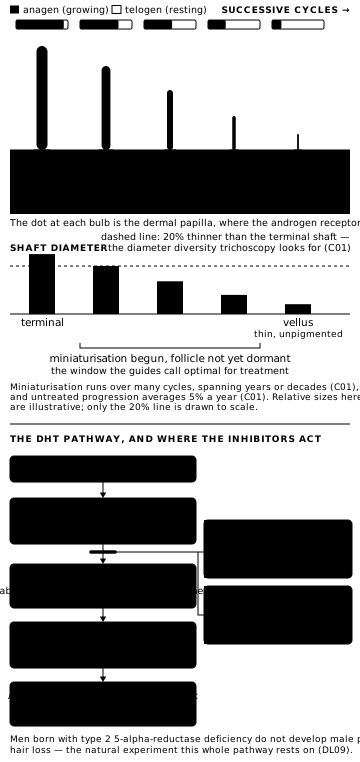
Testosterone circulates throughout your body, including to your scalp follicles. In the scalp, an enzyme called 5-alpha reductase converts testosterone to dihydrotestosterone (DHT). DHT is a more potent androgen—approximately 10 times more active than testosterone and binding to androgen receptors with 2-5 times higher affinity.
In genetically susceptible follicles, DHT binds to androgen receptors and triggers a cascade of effects:
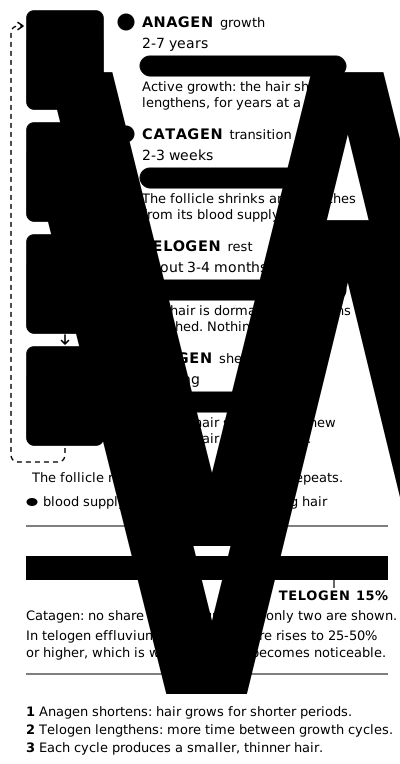
- Shortened anagen (growth) phase: Hair grows for shorter periods
- Prolonged telogen (resting) phase: More time between growth cycles
- Follicle miniaturization: Each cycle produces smaller, thinner hair
- Eventual dormancy: Follicle becomes too small to produce visible hair
The miniaturization process is gradual—typically occurring over many hair cycles spanning years or decades. A terminal hair (thick, pigmented, long-growing) progressively becomes vellus-like (thin, unpigmented, short) before the follicle essentially goes dormant. This gradual nature explains why early intervention is crucial: once follicles are fully miniaturized, reversal becomes significantly harder. The window for optimal treatment is when miniaturization has begun but follicles haven't yet become dormant.
The Genetic Component#
Androgenetic alopecia is approximately 80% hereditary, based on twin studies. However, the genetics are complex—it's not a single gene but multiple genes interacting.
Key Genetic Factors:
- Androgen Receptor Gene (AR): Located on the X chromosome, contributes approximately 40% of heritability
- Chromosome 20p11: Contains PAX1 and FOXA2 genes linked to AGA
- Additional loci: 1p36, 2q35, and others contribute smaller effects
The inheritance pattern means you can inherit susceptibility from either parent, though maternal inheritance (through the X chromosome) plays a significant role. Having a bald father doesn't guarantee you'll go bald; having a non-bald father doesn't mean you won't.
The genetic complexity explains why family patterns aren't always predictive. Your androgen receptor sensitivity, your 5-alpha reductase activity, and your specific pattern genes all interact. Some men with "baldness genes" never experience significant loss; some without obvious family history do. Genetics loads the gun, but other factors—age, overall health, possibly environmental influences—affect when and how the trigger gets pulled.
Prevalence: How Common Is It?#
Androgenetic alopecia is remarkably common, though prevalence varies by age, sex, and ethnicity.
In Men#
- Age 30: ~30% show some degree of AGA
- Age 50: ~50% affected
- Age 70: 70-80% affected
- Lifetime risk: Up to 80% in Caucasian men
In Women#
- Age 29: ~12% affected
- Age 50: ~25-40% affected
- Over 65: 50-75% affected
Ethnic Variation#
- Caucasian men: Highest prevalence (70-80% lifetime)
- Asian men: Lower prevalence (15-20% by age 50)
- African men: Intermediate (15-30% by age 50)
- Women: Less ethnic variation, but similar age progression
The high prevalence means androgenetic alopecia is essentially a normal variation in human biology rather than a disease in the traditional sense. However, the psychological impact can be significant regardless of how "common" the condition is. Understanding that millions of others share your experience can provide perspective, but it doesn't diminish the legitimacy of wanting treatment. Prevalence data also informs expectations: if you're male and over 50, some degree of AGA is statistically normal.
Patterns and Classification#
Hair loss in AGA follows predictable patterns, which has led to classification systems used by dermatologists worldwide.
Male Pattern (Hamilton-Norwood Scale)#
The Hamilton-Norwood classification identifies 7 stages of male pattern hair loss:
Stage I: No significant recession; adolescent hairline may show minor maturation
Stage II: Adult hairline with slight temporal recession; not necessarily pathological
Stage III: First stage of clinical significance; deep temporal recession creating M-shape
Stage III Vertex: Stage III frontal pattern plus early vertex (crown) thinning
Stage IV: Further frontal recession with enlarging vertex area; some hair remains between zones
Stage V: Frontal and vertex zones beginning to merge; separation band narrowing
Stage VI: Bridge between frontal and vertex lost; single large affected area
Stage VII: Most extensive pattern; only horseshoe of hair remains on sides and back
Female Pattern (Ludwig Scale)#
Women typically experience diffuse thinning rather than the patterned recession seen in men:
Stage I: Noticeable thinning on crown with intact frontal hairline
Stage II: More pronounced thinning with wider part; scalp visible through hair
Stage III: Extensive thinning; scalp clearly visible; frontal hairline usually preserved
Classification matters for treatment planning and prognosis. Stage II-III male pattern often responds well to medical treatment. Stage VI-VII may require surgical restoration for meaningful improvement. Women's preserved frontal hairline actually makes their pattern more amenable to treatment in many cases. Your stage at diagnosis influences which treatments are most appropriate and what results you can realistically expect.
Diagnosis: Beyond the Mirror#
While you might recognize hair loss in the mirror, proper diagnosis ensures you're treating the right condition and identifies the best approach.
Clinical Examination#
A dermatologist will assess:
- Pattern: Does loss follow AGA patterns or suggest other conditions?
- Scalp condition: Any inflammation, scarring, scaling?
- Hair pull test: Assessing active shedding
- Hair quality: Texture, diameter, miniaturization visible?
Trichoscopy (Dermoscopy)#
This non-invasive technique uses magnification to examine scalp and hair characteristics:
Key AGA Features:
- Hair diameter diversity (>20% variation diagnostic)
- Yellow dots (empty follicles with sebum)
- White dots (fibrotic follicles)
- Increased vellus-to-terminal ratio
- Miniaturization in characteristic areas
Trichoscopy has revolutionized AGA diagnosis with 98.3% sensitivity and 96.7% specificity. This means it correctly identifies AGA in 98% of cases and correctly rules it out in 97% of non-AGA cases. The technique can detect miniaturization before it's visible to the naked eye, enabling earlier intervention. If you're concerned about hair loss, trichoscopy provides objective evidence rather than subjective assessment.
Laboratory Tests#
Blood tests aren't routine for typical AGA presentation but may be ordered if:
- Pattern is atypical
- Rapid onset suggests other causes
- Additional symptoms present
- Women with irregular periods or other androgen symptoms
Common panels when indicated:
- Thyroid function (TSH, free T4)
- Iron studies (ferritin, serum iron)
- Complete blood count
- Vitamin D (if deficiency suspected)
- Hormonal panel (women with hyperandrogenism signs)
Scalp Biopsy#
Rarely necessary for AGA diagnosis. Reserved for:
- Unclear diagnosis after clinical/dermoscopic examination
- Suspected scarring alopecia
- Treatment-resistant cases needing confirmation
- Differentiating multiple concurrent conditions
Treatment: Evidence-Based Options#
Treatment for androgenetic alopecia works through several mechanisms: blocking DHT production, blocking DHT action at the receptor, stimulating follicles directly, or surgically redistributing hair.
First-Line Treatments#
Minoxidil (Topical and Oral)#
How it works: Vasodilator that extends anagen phase and increases follicle size. Exact mechanism not fully understood but involves potassium channel opening and increased blood flow.
Evidence:
- 5% solution: 81% show improvement at 48 weeks
- 2% and 5% both effective; 5% superior in men
- Foam and solution equally effective
Usage:
- Topical: Apply to dry scalp twice daily (5%) or once daily (some formulations)
- Oral: 1.25-5mg daily (emerging option, off-label in many regions)
Timeline: Initial shedding possible at weeks 2-4; visible improvement by months 3-6; peak results at 12 months
Side effects: Scalp irritation (topical), unwanted facial hair, initial shedding, systemic effects rare with topical
Minoxidil remains first-line because it's effective, FDA-approved, and well-tolerated. It works independently of the androgen pathway, making it suitable for both men and women. The main challenge is adherence—twice-daily application for life is a significant commitment. Once-daily formulations and oral options are improving convenience. Stopping treatment leads to gradual loss of gains over 3-6 months.
Finasteride (Men Only)#
How it works: Inhibits type II 5-alpha reductase, reducing scalp DHT by approximately 60-70% and serum DHT by 70%.
Evidence:
- 83-87% response rate at 2 years
- Maintains or increases hair count in most users
- Superior to minoxidil alone for many patients
Usage: 1mg oral daily
Timeline: Shedding possible in first months; stabilization by month 3; visible improvement by months 6-12; continued improvement through year 2
Side effects: Sexual side effects in 2-4% (usually resolve with continuation or cessation); rare persistent effects reported (controversial); not for use in women of childbearing potential
Finasteride addresses the root cause (DHT) rather than just stimulating follicles. This makes it particularly effective for maintaining existing hair and preventing progression. The sexual side effect concern has been extensively studied—most men experience no issues, and most who do find effects resolve. However, informed consent and monitoring are essential. For men with moderate-to-advanced AGA, finasteride often forms the foundation of treatment.
Second-Line Treatments#
Dutasteride#
How it works: Inhibits both type I and type II 5-alpha reductase, reducing serum DHT by 90-94%.
Evidence: Superior to finasteride in head-to-head studies for hair count increase
Status: FDA-approved for BPH, off-label for AGA in most countries; approved for AGA in South Korea and Japan
Usage: 0.5mg oral daily
Considerations: Longer half-life (4-5 weeks); greater DHT suppression may mean greater efficacy but potentially more side effects
Combination Therapy#
Evidence consistently shows combination therapy outperforms monotherapy:
- Minoxidil + finasteride: Superior to either alone
- Topical + oral: Addressing multiple pathways
- Medical + procedural: Adding LLLT, microneedling, or PRP
Combination therapy makes biological sense—you're addressing DHT (finasteride), stimulating follicles (minoxidil), and potentially adding growth factors (PRP) or enhancing absorption (microneedling). Real-world practice increasingly favors combination approaches, especially for moderate-to-advanced AGA. The key is starting with proven treatments and adding adjuncts based on response, rather than substituting unproven options for evidence-based ones.
Adjunctive Treatments#
Low-Level Laser Therapy (LLLT)#
How it works: Red light (630-670nm) stimulates cellular metabolism in follicles
Evidence: FDA-cleared devices; modest but consistent improvement in studies
Options: Home devices (caps, combs, helmets); clinic-based panels
Considerations: Requires consistent use (typically 3x weekly); effects modest compared to finasteride/minoxidil
Microneedling#
How it works: Controlled micro-injury stimulates growth factors and enhances topical absorption
Evidence: 1.5mm depth appears optimal; significant improvement when combined with minoxidil
Usage: Weekly to biweekly sessions; can be performed at home with roller or professional dermapen
Considerations: Not FDA-approved specifically for hair loss; enhances rather than replaces primary treatments
Platelet-Rich Plasma (PRP)#
How it works: Concentrated growth factors from your own blood injected into scalp
Evidence: Variable quality; some studies show benefit, others minimal effect
Usage: Typically 3-4 sessions, 4-6 weeks apart; maintenance every 4-6 months
Considerations: Expensive; evidence less robust than for finasteride/minoxidil; wide variation in protocols affects outcomes
Adjunctive treatments add value when combined with proven first-line options. LLLT and microneedling have reasonable evidence, low risk, and can be done at home. PRP remains controversial due to variable evidence and high cost. None of these should replace finasteride or minoxidil—they should augment them. The "kitchen sink" approach isn't necessarily better; strategic combination based on individual response is more sensible.
Emerging Treatments#
Clascoterone#
How it works: Topical antiandrogen that blocks DHT at the receptor level without systemic absorption
Evidence: Phase 3 trials showing up to 539% improvement versus placebo at 12 months
Status: FDA-approved for acne; Phase 3 for AGA ongoing
Promise: Could offer antiandrogen efficacy without systemic effects—particularly relevant for women
Other Pipeline Treatments#
- JAK inhibitors: Showing promise, particularly for combined alopecia areata/AGA
- Exosome therapy: Early-stage research on stem cell-derived exosomes
- Gene therapy: Theoretical future option targeting androgen receptor expression
- Wnt pathway modulators: Targeting follicle stem cell activation
Progression: What to Expect Without Treatment#
Understanding natural progression helps set realistic expectations and motivates early intervention.
Typical Timeline#
Early Stage (3-5 years): Subtle thinning, often unnoticed. Miniaturization beginning. Optimal intervention window.
Middle Stage (5-15 years): Visible thinning in characteristic pattern. Progression accelerating. Treatment can still produce significant improvement.
Advanced Stage (15+ years): Extensive loss. Follicles increasingly fibrotic. Treatment maintains remaining hair; regrowth limited.
Progression Rate#
- Average: 5% annual loss if untreated
- Early onset (<25 years): Often more aggressive progression
- Late onset (>50 years): May progress more slowly
- Stability: Rare without treatment; eventual progression expected
The 5% annual progression rate means waiting 5 years could result in 25% additional loss. This math strongly favors early intervention. Yet many wait years before seeking treatment, often because they don't recognize the problem or believe treatments don't work. The evidence clearly shows that maintaining hair is easier than regrowing it. Every year of delay narrows your treatment window.
Special Considerations#
Women's Hair Loss#
Female androgenetic alopecia differs from male pattern in several ways:
- Pattern: Diffuse thinning rather than recession; frontal hairline usually preserved
- Hormonal complexity: May involve PCOS, menopause, or other factors
- Treatment options: Minoxidil first-line; antiandrogens (spironolactone) may be used; finasteride contraindicated in pregnancy
Women's hair loss is underdiagnosed and undertreated. The diffuse pattern is harder to recognize than male recession, and women may attribute thinning to aging or stress. Hormonal evaluation is more commonly indicated in women. Treatment response is often good, but expectations should account for the diffuse nature of the loss—improvement is more subtle than the dramatic "before/after" often shown for men.
Young Adults#
Early-onset AGA (before age 25) presents unique challenges:
- Psychological impact: Often more significant during identity formation
- Aggressive progression: Early onset often predicts more extensive eventual loss
- Treatment decisions: Long-term medication commitment at young age
- Long-term planning: May want to preserve options for future surgical restoration
Treatment After Hair Transplant#
Hair transplant doesn't cure AGA—it redistributes DHT-resistant hair. Medical therapy remains important:
- Pre-transplant: Stabilize loss to optimize surgical planning
- Post-transplant: Protect native hair that will continue miniaturizing
- Long-term: Maintain results and potentially reduce need for future procedures
Lifestyle Factors#
While AGA is primarily genetic/hormonal, lifestyle factors can influence progression and overall hair health.
Factors That May Help#
- Balanced nutrition: Adequate protein, iron, zinc, biotin
- Stress management: Chronic stress may accelerate progression
- Scalp health: Clean, non-inflamed scalp optimizes follicle function
- Sleep: Adequate rest supports overall health including hair
Factors That Don't Cause AGA#
- Hats: Don't cause hair loss
- Frequent washing: Doesn't accelerate AGA
- Styling products: Don't cause pattern baldness (may cause breakage)
- Masturbation/sex: No connection to AGA despite myths
Lifestyle optimization supports overall health and may marginally benefit hair, but no lifestyle change can prevent or treat androgenetic alopecia. Spending energy on dietary supplements or stress reduction while avoiding proven treatments like finasteride is misallocating resources. Address lifestyle factors as part of overall wellness, but rely on medical treatment for AGA itself.
The Psychological Dimension#
Hair loss affects more than appearance. Studies document significant psychological impact:
- Self-esteem: Decreased in many AGA sufferers
- Anxiety: Especially around social situations
- Depression: Higher rates in hair loss populations
- Body image: Negative impact on perceived attractiveness
The psychological impact of hair loss is real and valid. Dismissing concerns as "vanity" ignores substantial evidence of quality-of-life effects. Effective treatment improves psychological outcomes. If hair loss significantly affects your wellbeing, seeking treatment is a legitimate healthcare decision, not superficial concern. Counseling or support groups can complement medical treatment for those struggling emotionally.
Frequently Asked Questions#
Can androgenetic alopecia be cured?#
Currently, no. AGA can be effectively managed with ongoing treatment, but stopping treatment leads to progression. Research continues toward more permanent solutions.
Will my hair loss follow my father's pattern?#
Not necessarily. Genetics are complex, involving genes from both parents. Your pattern may differ from any family member's.
Is finasteride safe long-term?#
20+ years of data support long-term safety for most users. Side effects occur in 2-4% and usually resolve. Discuss risks and monitoring with your doctor.
Why do treatments stop working?#
They usually don't "stop working"—progressive miniaturization can exceed treatment effect in advanced cases, or non-adherence reduces efficacy. True treatment resistance exists but is uncommon.
Should I start treatment even with minimal loss?#
Early intervention consistently produces better outcomes. The best time to treat is when you first notice changes, not after significant progression.
Can women use finasteride?#
Not if pregnant or potentially pregnant (causes fetal abnormalities). Post-menopausal women may use it off-label with medical supervision.
How do I know if treatment is working?#
Standardized photos every 3 months. Trichoscopy can show improvement before it's visible. Maintaining current hair counts is success—you don't need dramatic regrowth.
Is hair transplant surgery a permanent solution?#
Transplanted hair is DHT-resistant and permanent. However, surrounding native hair continues to miniaturize, requiring ongoing medical therapy or future procedures.
Taking Action#
Androgenetic alopecia is progressive without treatment but highly manageable with evidence-based intervention. Key principles:
- Start early: Maintenance is easier than regrowth
- Use proven treatments: Finasteride and minoxidil have decades of evidence
- Combine approaches: Multi-modal treatment often outperforms monotherapy
- Track progress: Standardized photos provide objective assessment
- Be patient: Results take 6-12 months; commitment is essential
- Seek expertise: Dermatologists can optimize your approach
References
- StatPearls. Androgenetic Alopecia. NBK430924. 2024.
- Journal of Investigative Dermatology. Pathogenesis and Treatment of AGA. 2024-2025.
- PubMed Meta-Analysis. Effectiveness of Finasteride and Minoxidil in AGA.
- PMC. Trichoscopy Diagnostic Accuracy in Androgenetic Alopecia.
- American Academy of Dermatology. Hair Loss Classification Systems.
- Clinical Reviews. Emerging Treatments for Androgenetic Alopecia. 2024-2025.
- Epidemiological Studies. Global Prevalence of Androgenetic Alopecia.
- Journal of the American Academy of Dermatology. AGA Management Guidelines.
- PMC. Natural History and Progression of Androgenetic Alopecia.
- Mayo Clinic. Patient Education: Hair Loss Causes and Treatment.
Medical Disclaimer
This guide provides educational information about androgenetic alopecia based on current medical literature. It is not a substitute for professional medical advice, diagnosis, or treatment. Individual responses to treatments vary, and some treatments have potential side effects that should be discussed with a qualified healthcare provider. Always consult a dermatologist or physician before starting any hair loss treatment, especially prescription medications.