DHT and Hair Loss: Complete Explanation
2,901 words·Compiled from cited medical literature·Not medical advice
On this page 14 sections
- Who This Is For
- What Is DHT?
- The 5-Alpha Reductase Enzyme
- How DHT Causes Hair Loss
- The Androgen Paradox
- Genetic Sensitivity: The AR Gene
- Does Serum DHT Level Matter?
- Pharmaceutical DHT Blockers
- Natural DHT Blocking Options
- Timeline Expectations
- Should You Test Your DHT Levels?
- Combining Approaches
- The Bottom Line
- Frequently Asked Questions
Understanding Why DHT Causes Hair Loss—And What You Can Do About It
Who This Is For#
This guide is for you if:
- You want to understand why hair loss happens at the hormonal level
- You've heard about DHT but want the science explained clearly
- You're considering finasteride or dutasteride and want to understand how they work
- You're interested in natural DHT-blocking alternatives
- You want to understand the genetic component of pattern hair loss
This guide is NOT for you if:
- You're experiencing sudden hair loss (may not be DHT-related)
- You have hair loss with scalp symptoms like pain, redness, or scarring
- You need immediate treatment decisions (consult a dermatologist)
- You're female (DHT works differently; see our women's hair loss guide)
- You haven't been diagnosed with pattern hair loss
What Is DHT?#
DHT stands for dihydrotestosterone. It's an androgen hormone—a chemical messenger that drives masculine characteristics. But unlike what the name might suggest, DHT isn't foreign or harmful. Your body makes it deliberately.
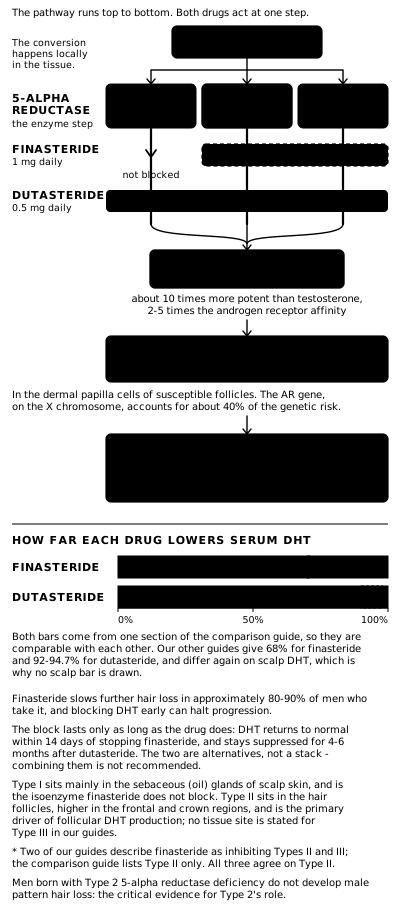
Here's the basic process: Your body produces testosterone. An enzyme called 5-alpha reductase converts some of that testosterone into DHT. This happens in various tissues including your prostate, skin, and—importantly for our discussion—your scalp.
DHT is approximately 10 times more potent than testosterone and has 2-5 times higher affinity for androgen receptors. This increased potency explains why DHT drives biological processes that testosterone cannot accomplish alone—and why it has such powerful effects on susceptible hair follicles. The conversion happens locally in tissues, meaning your scalp makes its own DHT from circulating testosterone.
The 5-Alpha Reductase Enzyme#
The enzyme that creates DHT exists in two main forms, called isoenzymes:
Type 1 5-alpha reductase (encoded by the SRD5A1 gene on chromosome 5):
- Found primarily in sebaceous glands (oil glands) in scalp skin
- Lower concentration in hair follicles themselves
- May contribute to scalp oiliness
Type 2 5-alpha reductase (encoded by the SRD5A2 gene on chromosome 2):
- Found in hair follicles of the scalp
- Higher concentration in frontal and vertex (crown) regions
- Primary driver of follicular DHT production
The critical evidence for Type 2's role comes from genetic studies: men born with Type 2 5-alpha reductase deficiency do not develop male pattern hair loss. Their bodies cannot produce DHT in hair follicles, so regardless of their testosterone levels, their scalp hair remains intact. This discovery led directly to the development of finasteride, which specifically targets Type 2 5-alpha reductase.
How DHT Causes Hair Loss#
Understanding the miniaturization process helps explain why early treatment matters:
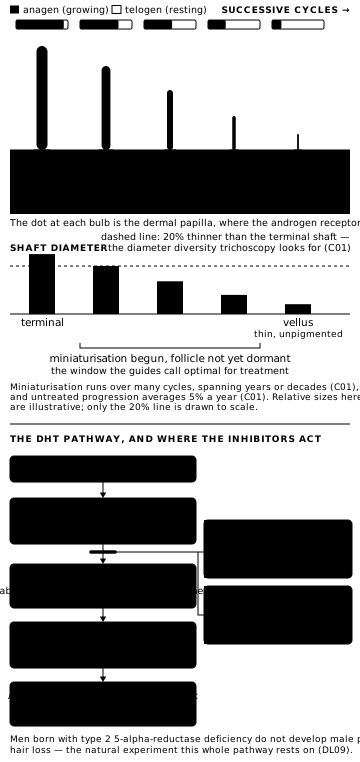
Step 1: DHT Binds to Androgen Receptors Hair follicles in certain scalp areas (frontal hairline, temples, crown) contain androgen receptors in their dermal papilla cells—the "command center" of each follicle. When DHT binds to these receptors, it triggers a cascade of genetic changes.
Step 2: Gene Expression Changes The DHT-receptor complex enters the cell nucleus and activates specific genes. These genes produce proteins that progressively alter the hair follicle's behavior.
Step 3: Growth Cycle Disruption The anagen (growth) phase shortens while the telogen (resting) phase lengthens. Each successive hair cycle produces a thinner, shorter hair.
Step 4: Follicular Miniaturization Over multiple cycles, terminal hairs (thick, pigmented) transform into vellus hairs (thin, unpigmented, barely visible). The follicle itself shrinks.
DHT also suppresses the Wnt/β-catenin signaling pathway, which is essential for hair follicle proliferation and maintenance. Additionally, DHT-activated follicles release transforming growth factor beta (TGF-β), which further accelerates miniaturization. This explains why blocking DHT early can halt progression—once the follicle shrinks, reversing miniaturization becomes increasingly difficult.
The Androgen Paradox#
One puzzling aspect of DHT is its opposite effects on different hair:
Hair DHT Stimulates:
- Beard and facial hair
- Chest hair
- Pubic hair
- Underarm hair
Hair DHT Miniaturizes:
- Frontal hairline
- Temples
- Vertex (crown)
This "androgen paradox" occurs because hair follicles in different body regions have different genetic programming. Scalp follicles in susceptible areas are genetically programmed to respond negatively to DHT, while facial and body follicles respond positively. This is why men can have full beards while losing scalp hair—same hormone, opposite responses based on follicle genetics.
Genetic Sensitivity: The AR Gene#
DHT doesn't cause hair loss in everyone. The determining factor is genetic sensitivity, and the androgen receptor (AR) gene is the most important genetic player.
Key Facts About the AR Gene:
- Located on the X chromosome at position Xq11-q12
- Contains variable repeat regions (CAG and GGN repeats) that affect receptor sensitivity
- Accounts for approximately 40% of the genetic risk for pattern hair loss (etiological fraction of 0.46)
- Variations increase androgen receptor sensitivity in scalp follicles
Because the AR gene is on the X chromosome, and men inherit their X from their mother, the maternal inheritance pattern is significant. Research shows the average phenotypic resemblance is greater between affected males and their maternal grandfathers than between affected males and their fathers. However, hair loss is polygenic—multiple genes contribute—so looking at both sides of the family provides a more complete picture.
This genetic sensitivity explains why two men with identical DHT levels can have vastly different hair: one's receptors respond more strongly to DHT than the other's.
Does Serum DHT Level Matter?#
You might assume that high DHT levels cause hair loss and low levels protect against it. Reality is more nuanced.
What Research Shows:
- Studies found increased serum DHT in some AGA patients but also in controls
- Differences in mean DHT values were not statistically significant between groups
- Visual examination is more diagnostic than serum DHT testing
- Local scalp DHT matters more than circulating levels
Your serum DHT level is less important than two other factors: (1) how much DHT your scalp produces locally via 5-alpha reductase, and (2) how sensitive your follicles' androgen receptors are. A man with "normal" DHT levels but highly sensitive receptors may lose more hair than a man with elevated DHT and less sensitive receptors. This is why DHT blood tests have limited diagnostic value for hair loss—the action happens locally, not systemically.
Pharmaceutical DHT Blockers#
Two FDA-approved medications reduce DHT levels through 5-alpha reductase inhibition:
Finasteride (Propecia)#
Mechanism: Selectively inhibits Type 2 and Type 3 5-alpha reductase DHT Reduction:
- Serum: ~70% reduction
- Scalp: 64-69% reduction
- Prostate: ~90% reduction
Timeline:
- 24 hours: 65% reduction in serum DHT
- Months 1-3: DHT stabilization, possible temporary shedding
- Months 3-6: Visible reduction in hair loss, early regrowth
- Month 12: Optimal results typically apparent
- Month 24: Continued improvement in some men
Efficacy Data:
- 86% maintain or increase hair count at 1 year
- 48% show improvement at 1 year
- 66% show improvement at 2 years
- 99.1% showed increased hair growth over 10 years in one study of 532 men
Finasteride doesn't achieve 100% DHT reduction, which is actually beneficial—some DHT serves normal physiological functions. The 70% reduction is sufficient to slow or stop miniaturization in most men while maintaining DHT for other tissues. Finasteride only works while you're taking it; DHT returns to normal within 14 days of stopping, and hair loss resumes within 6-12 months.
Dutasteride (Avodart)#
Mechanism: Inhibits all three 5-alpha reductase isoenzymes (Types 1, 2, and 3) DHT Reduction:
- Serum: 92-94.7% reduction
- Scalp: 51% reduction
Comparative Data: In a 416-man randomized trial over 24 weeks, dutasteride 2.5 mg was superior to finasteride 5 mg for hair count increase. Dutasteride provides approximately 3x stronger Type 2 inhibition and 100x stronger Type 1 inhibition than finasteride.
Despite greater systemic DHT suppression, dutasteride only reduces scalp DHT by 51% compared to finasteride's 64-69%. This paradox suggests that scalp DHT levels don't perfectly correlate with hair outcomes—other factors including receptor sensitivity and local tissue responses matter. Dutasteride is FDA-approved for hair loss only in Japan and South Korea due to concerns about increased adverse effects from more complete DHT suppression.
Natural DHT Blocking Options#
For those preferring non-pharmaceutical approaches, several natural compounds show evidence of DHT-blocking activity:
Saw Palmetto (Serenoa repens)#
Mechanism: Competitive, nonselective inhibitor of both 5-alpha reductase isoforms; blocks nuclear uptake of DHT; decreases DHT binding to androgen receptors by nearly 50%
Clinical Evidence:
- 60% improvement in overall hair quality
- 27% improvement in total hair count
- 83.3% of patients showed increased hair density
- 38% showed increased hair growth over 24 months (320 mg daily)
DHT Reduction: 15-20% (compared to 60-70% with finasteride)
Dosage: 320 mg daily appears safe and effective; higher doses haven't shown additional benefit
Pumpkin Seed Oil#
Mechanism: Contains phytosterols that inhibit testosterone-to-DHT conversion
Clinical Evidence:
- Randomized, double-blind, placebo-controlled trial of 76 men
- 24 weeks of treatment
- Treatment group: 40% increase in mean hair count
- Placebo group: 10% increase
- Statistically significant difference
Dosage: 400 mg daily (dosages of 400-1000 mg appear safe)
Natural DHT blockers offer a gentler approach with minimal side effects. However, their DHT reduction is substantially less than pharmaceutical options—saw palmetto's 15-20% reduction versus finasteride's 70%. A small Korean trial found additive benefits when combining 320 mg saw palmetto with 1000 mg pumpkin seed oil, raising success rates to 68%. Natural options may work best for early-stage hair loss or as adjuncts to pharmaceutical treatment.
Timeline Expectations#
Understanding realistic timelines prevents discouragement:
Initial Phase (Month 1)
- DHT levels dropping rapidly
- No visible changes expected
- Follicles beginning to respond internally
Adjustment Phase (Months 1-3)
- Possible temporary shedding (paradoxical but positive sign)
- Weakened hairs being replaced
- Stabilization of hair loss rate
Early Results Phase (Months 3-6)
- Reduced daily shedding noticeable
- Some early regrowth visible
- Hair texture may improve
Optimal Results Phase (Months 6-12)
- Maximum regrowth typically achieved
- Hair density improvements visible
- Pattern stabilization
Maintenance Phase (Year 2+)
- Some men continue improving through year 2
- Long-term maintenance of results
- Periodic assessment recommended
The 3-6 month timeline for visible results reflects hair biology, not medication failure. Hair follicles must cycle through complete growth phases to produce new, healthier hairs. Early shedding often indicates the treatment is working—miniaturized hairs are being pushed out by stronger follicles. Patience through the first 6-12 months is essential for accurate efficacy assessment.
Should You Test Your DHT Levels?#
DHT testing is available but has limitations for hair loss diagnosis:
When Testing May Be Useful:
- Monitoring response to 5-alpha reductase inhibitor treatment
- Evaluating testosterone-to-DHT ratio
- Investigating other androgen-related symptoms
- Research or detailed personal tracking
When Testing Has Limited Value:
- Diagnosing pattern hair loss (visual examination more reliable)
- Predicting response to treatment
- Comparing to "normal" ranges (high local sensitivity can cause hair loss with normal systemic levels)
More Informative Tests: If evaluating hormonal factors, a complete panel including free testosterone, total testosterone, DHEA, androstenedione, SHBG, and potentially thyroid function provides more actionable information.
Dermatologists rarely order DHT levels specifically for hair loss diagnosis. The clinical presentation—characteristic pattern, gradual onset, family history—combined with physical examination and trichoscopy provides more diagnostic value than blood tests. DHT testing is most useful for research purposes or tracking treatment response rather than initial diagnosis.
Combining Approaches#
Many men achieve optimal results through strategic combination:
Common Effective Combinations:
- Finasteride (systemic DHT reduction) + Minoxidil (topical growth stimulation)
- Finasteride + Ketoconazole shampoo (mild topical anti-androgen)
- Low-dose finasteride + saw palmetto + pumpkin seed oil
- Natural blockers + microneedling + topical treatments
Because hair loss involves multiple mechanisms beyond DHT alone (inflammation, scalp blood flow, follicle health), combination approaches targeting different pathways often outperform single treatments. However, combining multiple pharmaceutical DHT blockers (like finasteride and dutasteride) is not recommended due to redundant mechanisms and increased side effect risk.
The Bottom Line#
DHT is the primary driver of pattern hair loss in genetically susceptible individuals. Key points to remember:
- DHT itself isn't the enemy—genetic sensitivity is. Your androgen receptors determine how your follicles respond to DHT.
- The AR gene on the X chromosome contributes approximately 40% of genetic risk, explaining the maternal inheritance pattern often observed.
- Serum DHT levels are less important than local production and receptor sensitivity. Don't assume high DHT means more hair loss or low DHT means protection.
- Finasteride reduces DHT by ~70% at the scalp level, which is sufficient for most men to slow or stop progression.
- Natural options like saw palmetto and pumpkin seed oil offer gentler DHT reduction (15-20%) suitable for early-stage loss or combination therapy.
- Results take 3-12 months to become visible. Early shedding often indicates treatment is working.
- Treatment must continue to maintain results. DHT returns to normal within 14 days of stopping finasteride.
Frequently Asked Questions#
If my father is bald, does that mean I'll lose my hair to DHT?#
Not necessarily. While pattern hair loss has genetic components, the AR gene (accounting for ~40% of risk) is on the X chromosome, which you inherit from your mother. Looking at both maternal and paternal family provides a better picture, though no prediction is certain.
Can I take dutasteride if finasteride isn't working?#
Some men who don't respond to finasteride may respond to dutasteride's more complete DHT suppression. However, dutasteride isn't FDA-approved for hair loss in most countries and carries higher potential for side effects. Discuss with a dermatologist.
Will blocking DHT affect my muscle mass or workout performance?#
Finasteride blocks DHT, not testosterone. Your testosterone levels remain normal or may slightly increase. Studies haven't shown significant effects on muscle mass or athletic performance from finasteride use.
Are natural DHT blockers as effective as finasteride?#
No. Saw palmetto reduces DHT approximately 15-20% compared to finasteride's 70%. Natural options may help with early-stage loss or enhance pharmaceutical treatment but typically cannot match pharmaceutical efficacy for moderate-to-advanced hair loss.
How long until DHT blockers show results?#
Expect 3-6 months for visible changes and 12 months for optimal results. DHT levels drop within 24 hours of starting finasteride, but hair follicles need time to respond and produce new growth.
Can women use DHT blockers?#
Finasteride is not FDA-approved for women and is contraindicated during pregnancy due to risk of birth defects in male fetuses. Women's hair loss often involves different mechanisms. See our dedicated women's hair loss guide.
Will my hair loss return if I stop DHT blockers?#
Yes. DHT returns to normal within 14 days of stopping finasteride, and hair loss resumes. Most men lose regained hair within 6-12 months of discontinuation.
Do topical DHT blockers work as well as oral?#
Topical finasteride can reduce scalp DHT with potentially lower systemic absorption. Studies show it's effective, though direct comparison data with oral finasteride is limited. Topical forms may suit those concerned about systemic effects.
References
- PMC. Cause of Androgenic Alopecia: Crux of the Matter. PMC4174066. 2014.
- American Journal of Human Genetics. Genetic Variation in the Human Androgen Receptor Gene Is the Major Determinant of Common Early-Onset Androgenetic Alopecia. PMC1226186. 2005.
- StatPearls. 5α-Reductase Inhibitors. NCBI Bookshelf. 2024.
- Journal of the American Academy of Dermatology. The importance of dual 5α-reductase inhibition in the treatment of male pattern hair loss. 2006.
- JAAD. The effects of finasteride on scalp skin and serum androgen levels in men with androgenetic alopecia. 1999.
- Evidence-Based Complementary and Alternative Medicine. Effect of Pumpkin Seed Oil on Hair Growth in Men with Androgenetic Alopecia. PMC4017725. 2014.
- International Journal of Immunopathology and Pharmacology. Natural Hair Supplement: Friend or Foe? Saw Palmetto, a Systematic Review in Alopecia. PMC7706486. 2020.
- Postepy Dermatologii i Alergologii. Assessment of the usefulness of dihydrotestosterone in the diagnostics of patients with androgenetic alopecia. PMC4171668. 2014.
- Archives of Dermatological Research. Complementary and alternative supplements: a review of dermatologic effectiveness for androgenetic alopecia. PMC10761108. 2023.
- Hims Clinical Resource. Finasteride Results Timeline. 2024.
Medical Disclaimer
This article is for educational purposes only and does not constitute medical advice. DHT-blocking treatments have potential side effects that should be discussed with a healthcare provider. The information presented reflects current research but may not apply to your individual situation. Always consult with a qualified dermatologist or physician before starting any hair loss treatment, especially pharmaceutical options like finasteride or dutasteride.