Hair Loss Blood Tests: What to Request and Why (2026)
2,901 words·Compiled from cited medical literature·Not medical advice
On this page 11 sections
Evidence-based guide to the blood tests that reveal treatable causes of hair loss
Who This Guide Is For#
This guide is designed for you if:
- You're experiencing hair loss and want to identify treatable causes
- Your doctor suggested blood tests but you want to understand what to request
- You've had "normal" blood tests but are still losing hair
- You want to understand what your results actually mean for hair health
- You're deciding whether additional testing is worthwhile
This guide may not be ideal if:
- You've already had comprehensive testing and confirmed androgenetic alopecia
- You're experiencing sudden patchy hair loss (see a doctor urgently)
- You're looking for treatment options (covered elsewhere)
- You need guidance specific to chemotherapy-related hair loss
- You're under 18 (consult a pediatric dermatologist)
Why Blood Tests Matter#
The Hidden Causes of Hair Loss#
Hair loss isn't always genetic—and even when genetics play a role, underlying deficiencies can accelerate or worsen the process. Blood tests reveal treatable conditions that directly impact hair growth:
Nutritional deficiencies: Iron deficiency affects hair follicle function and is found in up to 40% of women experiencing hair loss. Vitamin D deficiency appears in approximately 80% of patients with various types of alopecia. These deficiencies are correctable.
Thyroid dysfunction: Both hypothyroidism and hyperthyroidism disrupt the hair growth cycle, affecting roughly 15% of people with hair loss. Thyroid conditions are highly treatable once identified.
Hormonal imbalances: Elevated androgens, PCOS, and other hormonal issues can cause or worsen pattern hair loss. Identifying these conditions opens treatment options beyond standard hair loss medications.
Autoimmune conditions: Alopecia areata and other autoimmune hair loss have distinct markers that blood tests can help identify, guiding appropriate treatment approaches.
The key insight: blood tests don't just explain hair loss—they reveal actionable opportunities. A ferritin level of 20 ng/mL (technically "normal") responds to supplementation far better than a ferritin level of 100 ng/mL.
The Problem with "Normal" Results#
Standard laboratory reference ranges are designed to identify disease, not optimize health. For hair, this matters:
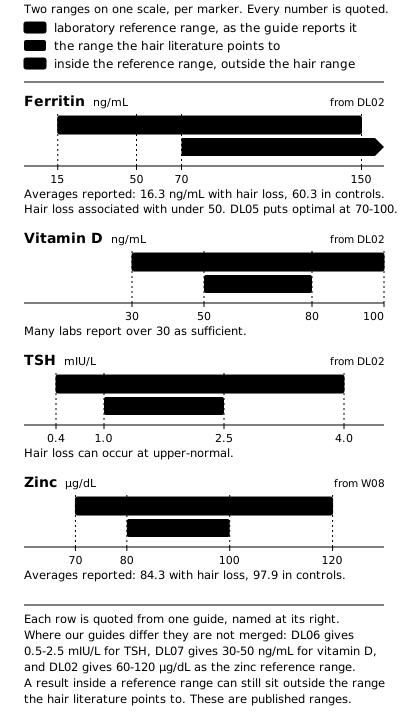
Ferritin example: Laboratory "normal" ranges often start at 15-20 ng/mL for women. But research shows hair loss patients have significantly lower ferritin (average 16.3 ng/mL) compared to controls (average 60.3 ng/mL). Hair specialists recommend levels above 50-70 ng/mL for optimal hair health.
Thyroid example: TSH "normal" range extends to 4.0-4.5 mIU/L in most labs. But many people experience symptoms—including hair loss—at levels above 2.5 mIU/L. Subclinical thyroid dysfunction often goes undetected.
Vitamin D example: Labs may report "sufficient" at 30 ng/mL, but hair specialists prefer levels in the 50-80 ng/mL range for optimal follicle function.
Understanding the difference between "normal" and "optimal" is crucial for addressing hair loss effectively.
The Core Testing Panel#
Tests Everyone Should Request#
Regardless of your suspected cause of hair loss, these tests provide essential baseline information:
Complete Blood Count (CBC): Measures red blood cells, white blood cells, hemoglobin, and platelets. Identifies anemia—present in 25-30% of hair loss patients—and reveals signs of infection or inflammation that might affect hair. This is your foundation test.
Ferritin: The iron storage protein. Ferritin reflects your body's iron reserves better than serum iron alone. Low ferritin is the most common nutritional cause of hair loss, affecting up to 40% of women with thinning hair.
Serum Iron with TIBC: Serum iron measures circulating iron; Total Iron Binding Capacity (TIBC) shows how much iron your blood could carry. Together with ferritin, these tests give a complete picture of iron status.
Thyroid Panel (TSH + Free T4): TSH is the screening test for thyroid function. High TSH suggests hypothyroidism; low TSH suggests hyperthyroidism. Both can cause diffuse hair thinning. Free T4 provides additional information about active thyroid hormone.
Vitamin D (25-hydroxyvitamin D): Vitamin D deficiency appears in approximately 80% of alopecia patients. This test measures stored vitamin D and guides supplementation.
Vitamin B12: B12 deficiency causes hair loss and is more common than many realize, especially in vegetarians, vegans, and people over 50 or taking certain medications (like metformin or PPIs).
Zinc: Zinc is essential for hair follicle function and protein synthesis. Deficiency causes telogen effluvium and impairs hair regrowth.
Optimal Ranges vs. Laboratory Normal#
Here's what the numbers actually mean for hair health:
| Test | Lab "Normal" Range | Optimal for Hair | Notes |
|---|---|---|---|
| Ferritin | 15-150 ng/mL (women) | >70 ng/mL | Hair loss associated with <50 ng/mL |
| Vitamin D | 30-100 ng/mL | 50-80 ng/mL | Many labs report >30 as "sufficient" |
| B12 | 200-900 pg/mL | >500 pg/mL | Symptoms can occur at "low normal" |
| TSH | 0.4-4.0 mIU/L | 1.0-2.5 mIU/L | Hair loss can occur at upper-normal |
| Zinc | 60-120 mcg/dL | Mid-upper range | Lower range associated with shedding |
| Hemoglobin | 12.0-16.0 g/dL (women) | >13.0 g/dL | Lower levels may affect hair cycling |
Extended Testing for Women#
The Hormone Panel#
Women with signs of hormonal hair loss—especially those with irregular periods, acne, excess facial/body hair, or female pattern thinning—benefit from additional hormone testing:
Total Testosterone: Measures total circulating testosterone. Elevated levels can contribute to androgenetic alopecia, but 75% of women with hormonal hair loss have normal total testosterone.
Free Testosterone: The biologically active form. Calculated from total testosterone and SHBG. More clinically relevant than total testosterone alone.
DHEA-S (Dehydroepiandrosterone Sulfate): Measures adrenal androgen production. Elevated DHEA-S may indicate PCOS, adrenal hyperplasia, or (rarely) adrenal tumors. Important for understanding the source of excess androgens.
SHBG (Sex Hormone Binding Globulin): SHBG binds testosterone, reducing its availability. Low SHBG means more free testosterone—and research shows AGA severity in women negatively correlates with SHBG levels.
Androstenedione: An androgen precursor. Research shows 25% of women with signs of androgen excess have normal testosterone but elevated androstenedione. This test catches cases other hormone tests miss.
Prolactin: Elevated prolactin (from pituitary issues or certain medications) can cause hair loss. Testing is warranted in women with irregular periods or other hormonal symptoms.
LH and FSH: These pituitary hormones regulate ovarian function. The LH-to-FSH ratio helps diagnose PCOS and other hormonal conditions affecting hair.
When to Request Hormone Testing#
Hormone panels aren't necessary for everyone. Request comprehensive hormone testing if you have:
- Female pattern hair loss (diffuse thinning, widening part)
- Irregular menstrual cycles or amenorrhea
- Acne (especially adult acne)
- Hirsutism (excess facial or body hair)
- Known or suspected PCOS
- Hair loss that started after stopping birth control
- Hair loss with rapid onset in reproductive years
Timing matters: Hormone testing in women should ideally occur on days 2-5 of the menstrual cycle, when hormone levels provide the most diagnostic information. Post-menopausal women can test any time.
Autoimmune Testing#
When to Consider Autoimmune Markers#
Autoimmune testing isn't routine for all hair loss patients. Consider requesting these tests if you have:
- Patchy hair loss (suggesting alopecia areata)
- Personal history of autoimmune conditions
- Family history of thyroid disease or autoimmune conditions
- Hair loss with scalp symptoms (redness, scaling, scarring)
- Other autoimmune symptoms (joint pain, fatigue, rashes)
ANA (Antinuclear Antibody): A screening test for autoimmune conditions. Positive results may indicate lupus, Sjögren's, or other conditions that can cause hair loss. Note that some healthy people have low-positive ANA without disease.
TPO Antibodies (Thyroid Peroxidase): Identifies autoimmune thyroid disease (Hashimoto's thyroiditis). Even with normal TSH, positive TPO antibodies indicate increased risk of thyroid dysfunction and may explain hair loss.
Anti-Thyroglobulin Antibodies: Another marker of autoimmune thyroid disease, often tested alongside TPO antibodies for complete assessment.
Interpreting Autoimmune Results#
Positive ANA requires context. Low titers (1:40 or 1:80) can occur in healthy individuals. Higher titers (1:160 or above) warrant further investigation, especially with other symptoms. A positive ANA alone doesn't diagnose any specific condition.
Positive thyroid antibodies are common—appearing in 10-15% of the general population. They indicate autoimmune thyroid activity but don't necessarily require treatment. They do warrant monitoring of thyroid function and may explain hair loss even when TSH is "normal."
How to Get the Tests You Need#
Advocating for Comprehensive Testing#
Many healthcare providers dismiss hair loss as "cosmetic" and order incomplete panels. Here's how to advocate effectively:
Frame it as a health concern: Hair loss can indicate thyroid disease, anemia, and other conditions. You're not asking about appearance—you're investigating potential underlying disease.
Be specific about what you want: Rather than asking for "blood tests for hair loss," provide a list of specific tests. Doctors respond better to informed, specific requests.
Explain quality of life impact: Research documents the psychological impact of hair loss. Communicating how it affects you can help providers understand the clinical significance.
Know when to escalate: If your primary care provider won't order comprehensive testing, request a referral to a dermatologist or endocrinologist who specializes in hair disorders.
Sample Request List#
Here's language you can use when requesting tests:
"I'm experiencing progressive hair loss and would like comprehensive blood work to rule out treatable causes. Specifically, I'd like:
- Complete Blood Count (CBC)
- Comprehensive Metabolic Panel
- Ferritin
- Serum Iron and TIBC
- TSH and Free T4
- Vitamin D (25-OH)
- Vitamin B12
- Zinc
[For women with hormonal symptoms, add:]
- Total and Free Testosterone
- DHEA-S
- SHBG
I understand that hair loss can indicate thyroid dysfunction, iron deficiency anemia, and other conditions. I want to ensure we're not missing a treatable cause."
Understanding Your Results#
What Low Ferritin Means#
Ferritin below 50 ng/mL is associated with hair loss, even though lab "normal" ranges start at 15-20 ng/mL. Research comparing hair loss patients to controls found:
- Hair loss patients: average ferritin 16.3 ng/mL
- Controls without hair loss: average ferritin 60.3 ng/mL
What to do: Iron supplementation typically raises ferritin levels within 8-12 weeks. Recheck ferritin after 3 months of supplementation. Many specialists recommend ferrous sulfate 325mg daily, taken with vitamin C to enhance absorption. Avoid taking with coffee, tea, or calcium.
What Abnormal Thyroid Tests Mean#
Elevated TSH (above 4.0 mIU/L): Suggests hypothyroidism. Even "subclinical" hypothyroidism (TSH 4-10 with normal T4) can cause hair thinning. Treatment with thyroid hormone often improves hair over 3-6 months.
Low TSH (below 0.4 mIU/L): Suggests hyperthyroidism. This also causes hair loss, often with other symptoms like weight loss, anxiety, and rapid heartbeat. Requires prompt evaluation.
Positive thyroid antibodies with normal TSH: Indicates Hashimoto's thyroiditis in early stages. While immediate treatment may not be needed, monitoring is important—and the autoimmune process itself may contribute to hair loss.
What Vitamin D Results Mean#
Vitamin D deficiency (below 30 ng/mL) appears in approximately 80% of alopecia patients. But even "sufficient" levels (30-50 ng/mL) may not be optimal for hair.
Target range: 50-80 ng/mL is ideal for most people
Supplementation: Typically 1,000-5,000 IU daily depending on starting level and body weight. Vitamin D is fat-soluble—take with a meal containing fat for best absorption.
Recheck: Test again after 3 months of supplementation to confirm adequate response
Follow-Up Testing#
When to Retest#
Blood tests aren't one-and-done. Follow-up testing ensures supplements and treatments are working:
| Marker | Retest Timeline | What to Look For |
|---|---|---|
| Ferritin | 8-12 weeks after starting iron | Rising toward >70 ng/mL |
| Vitamin D | 3 months after starting supplementation | 50-80 ng/mL target |
| Thyroid (TSH) | 6-12 weeks if starting medication | TSH 1.0-2.5 mIU/L |
| CBC | 8-12 weeks if anemic | Hemoglobin normalization |
| Hormones | 3-6 months after intervention | Improvement in levels |
Progress timeline: Hair changes take time. Even with corrected bloodwork, expect 3-6 months before seeing improvement in shedding, and 6-12 months before seeing regrowth.
Special Considerations#
Testing for Different Hair Loss Types#
Telogen Effluvium (diffuse shedding): Full core panel important—TE often has multiple contributing factors. Iron, thyroid, and vitamin D are priority tests.
Female Pattern Hair Loss: Core panel plus hormone testing if androgenic signs present. SHBG particularly informative.
Alopecia Areata: Core panel plus autoimmune markers (ANA, thyroid antibodies). Vitamin D especially important—deficiency common.
Male Pattern Baldness: Core panel to rule out contributing factors. Hormone testing less useful—AGA in men is primarily genetic, not caused by abnormally high testosterone.
Insurance and Cost Considerations#
Most insurance covers blood tests when ordered for diagnostic purposes. Tips for coverage:
- Tests ordered by a doctor with appropriate diagnosis code (hair loss = ICD-10 L65.9) typically covered
- Some labs offer self-pay discounts if paying out-of-pocket
- Direct-to-consumer testing (Quest, Labcorp patient-initiated) available but often not covered by insurance
- Cash-pay lab services (Ulta Lab Tests, Walk-In Lab) offer complete hair loss panels for $200-400
Frequently Asked Questions#
Can I order blood tests myself without a doctor?#
Yes, direct-to-consumer labs allow self-ordering in most states. You receive results directly and can share with your doctor. However, insurance typically doesn't cover self-ordered tests, and you'll need medical guidance to interpret results and create a treatment plan.
My ferritin is 25 ng/mL—my doctor said it's normal. Is it?#
It's within laboratory reference range but below optimal for hair health. Research shows hair loss patients average significantly lower ferritin than controls. Many hair specialists recommend supplementation for levels below 50-70 ng/mL, even when labs report "normal."
How long after correcting deficiencies will I see hair improvement?#
Shedding typically decreases within 2-3 months of correcting deficiencies. New growth takes 6-12 months to become visible. Hair grows about 6 inches per year, so meaningful cosmetic improvement requires patience.
Should men get hormone testing for hair loss?#
Usually not. Male pattern baldness is caused by genetic sensitivity to normal testosterone levels, not elevated testosterone. Hormone testing in men is only warranted if there are other symptoms suggesting endocrine disorders.
I had bloodwork and everything was normal. Now what?#
"Normal" by laboratory standards doesn't mean optimal. Review your results against the optimal ranges in this guide. If truly all optimal, your hair loss may be genetic (androgenetic alopecia) or caused by factors blood tests don't measure. A dermatologist can provide clinical evaluation.
How often should I retest if I'm taking supplements?#
Retest ferritin after 8-12 weeks, vitamin D after 3 months, and thyroid markers after 6-12 weeks if on medication. Once levels are optimal and stable, annual monitoring is typically sufficient.
Are there any tests that are overkill for hair loss?#
Comprehensive metabolic panels, liver function, and kidney function are good to have but rarely directly explain hair loss. Genetic testing for hair loss is available but doesn't change treatment decisions. Heavy metal testing is popular but rarely clinically useful.
My doctor only wants to test TSH. Should I push for more?#
TSH is a reasonable screening test, but it misses subclinical thyroid issues. Request Free T4 at minimum. If you have family history of thyroid disease or autoimmune conditions, thyroid antibodies are also warranted.
The Bottom Line#
Blood tests are essential for identifying treatable causes of hair loss. The core panel—CBC, ferritin, iron studies, thyroid function, vitamin D, B12, and zinc—reveals correctable issues in a significant percentage of hair loss patients. Women with hormonal symptoms benefit from additional hormone testing.
Understanding optimal ranges (not just laboratory "normal") is crucial. A ferritin of 20 ng/mL may be reported as normal, but research consistently shows this level is associated with hair loss. Advocating for comprehensive testing and targeting optimal ranges—not just normal ranges—gives you the best chance of identifying and treating underlying causes.
If your initial tests are truly optimal and hair loss persists, the cause is likely genetic or requires clinical evaluation. But starting with blood tests ensures you don't miss easily correctable factors that can make a meaningful difference.
References
- PMC - Serum Ferritin and Vitamin D in Hair Loss Patients
- PMC - Biochemical Status in Telogen Effluvium
- PMC - Hormonal Background of Hair Loss in Non-Scarring Alopecias
- PMC - DHT in Androgenetic Alopecia Diagnostics
- NYU Langone - Diagnosing Hair Loss
- Cleveland Clinic - DHEAS Test
- Healthline - Blood Tests for Hair Loss
- Donovan Hair Clinic - Blood Tests
- Wimpole Clinic - Hair Loss Blood Tests
- AAFP - Alopecia Areata Testing Guidelines
Medical Disclaimer: This article is for informational purposes only and does not constitute medical advice. Blood test interpretation requires clinical context. Work with a qualified healthcare provider to order, interpret, and act on blood test results.