How to Stop Minoxidil Shedding Phase: Complete Guide (2026)
2,671 words·Compiled from cited medical literature·Not medical advice
On this page 10 sections
Who This Is For#
This guide is for you if:
- You recently started minoxidil and noticed increased hair loss
- You're considering minoxidil but worried about the "dread shed"
- You're experiencing shedding and want to know if it's normal
- You want strategies to minimize shedding discomfort
- You need to know when shedding warrants concern
This guide is NOT for you if:
- You haven't started minoxidil yet (see our complete minoxidil guide first)
- Your shedding has continued beyond 4 months (see a dermatologist)
- You're losing hair in clumps or developing bald patches (medical evaluation needed)
- You're experiencing other symptoms like scalp pain or inflammation
What Is Minoxidil Shedding?#
Minoxidil shedding, colloquially known as "dread shed," is a temporary increase in hair fall that occurs when you first start using minoxidil for hair loss. While seeing more hair in your brush or shower drain can be alarming, this phenomenon is well-documented in clinical research and is actually a sign that the medication is working.
The technical term for this process is drug-induced telogen effluvium. Unlike typical telogen effluvium caused by stress or illness, minoxidil shedding occurs through a specific mechanism called "immediate telogen release," where the medication actively accelerates the normal hair cycle.
Understanding the Terminology#
When researchers describe minoxidil shedding, they're referring to the paradoxical increase in hair loss that occurs despite using a hair growth medication. Clinical studies report this affects anywhere from 17% to 55% of users—a wide range that likely reflects differences in how shedding is measured and reported across studies. The variability also suggests individual factors play a significant role in who experiences shedding and how severely.
Why Does Minoxidil Cause Shedding?#
To understand minoxidil shedding, you need to understand the hair growth cycle. Every hair follicle cycles through three phases:
Anagen (Growth Phase): Active hair growth lasting 2-7 years Catagen (Transition Phase): Brief transition period of 2-3 weeks Telogen (Resting Phase): Dormant period of 2-4 months before hair sheds
At any given time, approximately 85-90% of your scalp hairs are in anagen, while 10-15% are in telogen, resting and preparing to shed naturally.
The Mechanism of Minoxidil Shedding#
Minoxidil works by shortening the telogen phase and promoting the transition of dormant hair follicles into the anagen (growth) phase. When minoxidil activates these resting follicles, the old telogen hairs are pushed out prematurely to make room for new growth.
Think of it this way: those hairs in the telogen phase were going to fall out eventually—within the next few weeks to months. Minoxidil simply accelerates this process, causing all those scheduled-to-shed hairs to fall out around the same time rather than gradually over months.
This explains why shedding is temporary. You're not losing additional hairs; you're losing the same hairs on an accelerated timeline. Once these telogen hairs shed and the follicles transition to anagen, new and often healthier hair begins growing in their place.
When Does Minoxidil Shedding Start and Stop?#
The timeline of minoxidil shedding follows a predictable pattern for most users:
Week-by-Week Timeline#
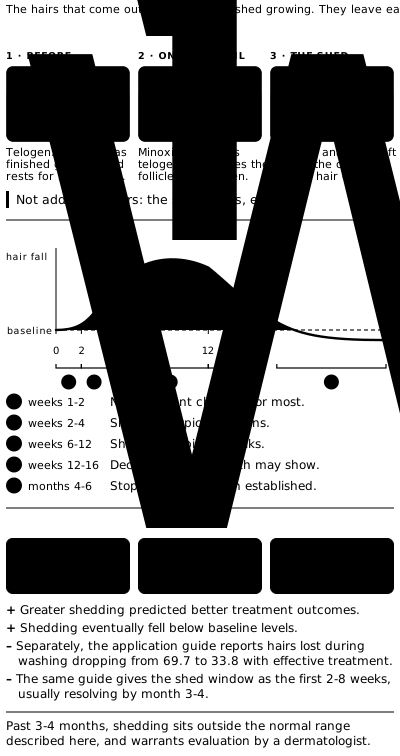
Weeks 1-2: Most users notice no significant changes. The medication is beginning to affect follicle activity, but visible shedding hasn't started.
Weeks 2-4: Shedding typically begins during this window. You may notice more hair in your brush, on your pillow, or in the shower drain.
Weeks 6-12: This is when shedding typically peaks. The increase in hair fall may feel alarming, but it's the most active period of follicle transition.
Weeks 12-16: Shedding gradually decreases. New hair growth may become visible, and hair fall returns toward baseline levels.
Months 4-6: For most users, shedding has stopped completely and new growth is established. Hair density begins to improve.
Duration Expectations#
Research indicates the average duration of minoxidil shedding is 1.5 to 2 months, though this varies considerably between individuals. A 2025 study tracking 49 patients found that temporary increased shedding was detected in the first 12 weeks, with the duration being longer in patients using 2% minoxidil compared to 5% formulations.
The key takeaway: if you're still experiencing significant shedding beyond 3-4 months, this is outside the normal range and warrants evaluation by a dermatologist.
Is Minoxidil Shedding a Good Sign?#
Here's the counterintuitive truth that research supports: minoxidil shedding is generally a positive indicator of treatment effectiveness.
Shedding Predicts Better Outcomes#
A landmark 2025 study published in the Journal of Dermatological Treatment found a significant correlation between initial shedding severity and treatment outcomes. The findings were striking:
- In the 5% minoxidil group, greater initial shedding was associated with greater improvements in hair density
- Greater shedding correlated with improvements in hair diameter
- Greater shedding predicted better terminal hair proportion
- Participants who initially shed the most demonstrated the greatest improvements in androgenetic alopecia severity by week 24
Both the 2% and 5% minoxidil groups showed a significant association between maximum shedding and improvements in BASP classification (a standard measure of hair loss severity).
Importantly, in both groups, hair shedding eventually fell below baseline levels—meaning patients ended up losing less hair than they were before starting treatment.
What This Means for You#
If you're experiencing shedding, it likely indicates that:
- Your hair follicles are responding to the medication
- The transition from telogen to anagen is occurring
- You may see better results than someone who doesn't shed
Conversely, minimal or no shedding doesn't necessarily mean the treatment isn't working—it may simply mean you had fewer hairs in the telogen phase when you started.
How to Manage Minoxidil Shedding#
While you can't completely prevent minoxidil shedding, several strategies can help you manage the process and minimize discomfort.
1. Stay Consistent with Applications#
Consistency is crucial. Apply minoxidil as directed—typically 1 mL twice daily for topical solutions. Allow it to dry before styling or going to bed.
Inconsistent use can actually worsen shedding. When you skip applications, you interrupt the follicle transition process, potentially leading to more irregular and prolonged shedding patterns.
The Importance of Not Stopping#
Perhaps the most critical advice: do not stop minoxidil abruptly due to shedding. Dr. Hannah Kopelman, a board-certified dermatologist, states: "The worst thing you can do is stop abruptly—this can make the shedding worse."
Stopping minoxidil during the shedding phase can:
- Interrupt the follicle transition process
- Lead to additional hair loss as follicles revert
- Delay any potential regrowth
- Negate the shedding you've already experienced
Unless shedding is truly extreme or lasts beyond 3-4 months, staying the course is the recommended approach.
2. Use the Correct Dosage#
More is not better with minoxidil. Applying more than the recommended 1 mL per application can lead to:
- Increased scalp irritation
- Dryness and flaking
- Potentially more pronounced shedding
- Higher risk of systemic absorption and side effects
Use the applicator provided to measure the correct amount, whether using liquid or foam formulations.
3. Choose Gentle Hair Care Products#
Your scalp is undergoing significant activity during the shedding phase. Supporting it with gentle products can make the process more comfortable:
Shampoo: Choose sulfate-free formulas. Sulfates can be harsh and drying, potentially exacerbating irritation.
Water Temperature: Use lukewarm water when washing your hair. Hot water can aggravate the scalp and worsen shedding.
Styling Products: Avoid products with harsh chemicals or alcohol that can irritate a sensitive scalp.
Hairstyles: Avoid tight ponytails, braids, or styles that put tension on follicles already under transition stress.
Product Formulation Matters#
If you're experiencing significant scalp irritation alongside shedding, consider your minoxidil formulation:
Liquid minoxidil often contains propylene glycol as a solvent, which can cause contact dermatitis and irritation in sensitive individuals.
Foam minoxidil is typically propylene glycol-free, making it less likely to cause flaking, itching, or irritation. The foam also absorbs quickly and leaves less residue.
If irritation persists, options include:
- Switching from liquid to foam
- Reducing from 5% to 2% concentration
- Applying once daily instead of twice
- Using a different brand with different inactive ingredients
4. Manage Stress#
Stress isn't just an emotional burden—it can directly impact hair health. High cortisol levels are associated with telogen effluvium, meaning stress can actually worsen or prolong shedding.
Consider incorporating stress management practices:
- Regular exercise
- Adequate sleep (7-9 hours)
- Meditation or mindfulness practices
- Scalp massage (which may also improve blood flow to follicles)
5. Support Overall Hair Health#
While not directly affecting minoxidil shedding, supporting overall hair health can promote stronger regrowth:
Nutrition: Ensure adequate protein intake (hair is primarily made of protein). Consider foods rich in biotin, iron, zinc, and omega-3 fatty acids.
Supplements: Some find biotin, saw palmetto, or omega-3 supplements helpful, though evidence for these specifically reducing minoxidil shedding is limited.
Scalp Health: Keep your scalp clean and healthy to optimize the environment for new hair growth.
When to Be Concerned#
While minoxidil shedding is normal, certain situations warrant medical attention:
Red Flags to Watch For#
Duration: If significant shedding continues beyond 3-4 months, consult a dermatologist. By this point, the initial shedding phase should have resolved.
Severity: Losing clumps of hair or developing noticeable bald patches is not typical minoxidil shedding. This could indicate a different underlying condition.
Pattern: Minoxidil shedding should be diffuse (spread across the scalp), not localized to specific areas. Patchy loss may indicate alopecia areata or another condition.
Associated Symptoms: Scalp pain, significant inflammation, pustules, or other symptoms alongside shedding require evaluation.
6-Month Mark: After 6 months, any continued excessive shedding is unusual and should be investigated.
What Your Doctor May Evaluate#
If you seek medical attention for concerning shedding, your dermatologist may:
- Examine your scalp with dermoscopy
- Perform a hair pull test
- Order blood work to check for nutritional deficiencies or thyroid issues
- Review your medical history and medications
- Assess for other forms of hair loss that may coexist with androgenetic alopecia
Comparing Shedding: 2% vs 5% Minoxidil#
Research provides some insights into how shedding differs between minoxidil concentrations:
Concentration and Shedding Patterns#
The 2025 study found that the temporary increase in shedding lasted longer in patients using 2% minoxidil compared to 5% formulations. However, in the 5% group, there was a stronger correlation between shedding severity and treatment efficacy.
This suggests:
- 5% minoxidil may cause more intense but shorter-duration shedding
- 2% minoxidil may cause milder but longer-lasting shedding
- 5% minoxidil shedding may be a better predictor of final results
For most men with androgenetic alopecia, 5% minoxidil is the standard recommendation due to superior efficacy. For women or those with sensitive scalps, 2% may be preferred despite the potentially prolonged shedding phase.
Frequently Asked Questions#
Can I prevent minoxidil shedding entirely?#
No proven method exists to completely prevent minoxidil shedding. Some research explores whether overlapping topical and oral minoxidil might reduce shedding severity, but this hasn't been conclusively demonstrated. The shedding is a natural consequence of the medication's mechanism of action.
Will all the hair I shed grow back?#
In most cases, yes. The hairs you lose during minoxidil shedding were going to fall out anyway—minoxidil simply accelerated the process. New hair grows in place of the shed hair, and this new hair is often healthier due to the improved follicular activity from minoxidil.
Should I stop minoxidil if shedding is severe?#
Unless the shedding is truly extreme (large clumps, bald patches) or continues beyond 3-4 months, stopping is generally not recommended. Stopping abruptly can worsen hair loss and negate any progress. If concerned, consult a dermatologist before discontinuing.
How can I tell the difference between normal shedding and something serious?#
Normal minoxidil shedding is diffuse (across the scalp), begins within weeks of starting treatment, and resolves within 2-3 months. Concerning signs include: patchy loss, shedding starting months after beginning treatment, loss in clumps, or shedding beyond 4 months.
Does foam minoxidil cause less shedding than liquid?#
Both formulations can cause shedding since the active ingredient is the same. However, foam may cause less scalp irritation due to the absence of propylene glycol, which could make the shedding period more comfortable even if not less severe.
Will I experience shedding every time I miss applications and restart?#
Possibly. Stopping and restarting minoxidil can trigger another shedding phase, which is one reason consistency is so important. This is sometimes called "rebound shedding" and can occur if you've been off the medication long enough for follicles to revert to their previous state.
Does combining minoxidil with finasteride affect shedding?#
Finasteride can also cause an initial shedding phase through a different mechanism. When starting both medications simultaneously, you may experience combined shedding. Some dermatologists recommend staggering the start of these medications by a few months to distinguish which is causing shedding if it becomes problematic.
How much hair loss is "too much"?#
Normal daily hair loss is 50-100 hairs. During minoxidil shedding, you might notice significantly more—but exact numbers are difficult to track. Focus on duration and pattern rather than trying to count individual hairs. If shedding is accompanied by visible thinning or bald patches, seek evaluation.
The Bottom Line#
Minoxidil shedding can be psychologically challenging—you're using a hair growth medication and losing more hair than before. However, understanding the science behind this process reveals it as a positive sign:
- It's temporary: Most shedding resolves within 4-8 weeks
- It's predictive: Greater shedding is associated with better treatment outcomes
- It's manageable: Simple strategies can make the process more comfortable
- It's normal: 17-55% of users experience it; you're not alone
The key is patience and consistency. Those who push through the shedding phase are rewarded with improved hair density and healthier follicles. Those who panic and quit early never see the benefits that await on the other side.
If you're in the midst of minoxidil shedding right now, remember: this phase ends. The research clearly shows that shedding eventually falls below baseline levels, and new growth takes its place. Stay the course, follow the management strategies, and trust the process.
References
- Journal of Dermatological Treatment (2025). Whether the transient hair shedding phase exist after minoxidil treatment and does it predict treatment efficacy?
- PMC (2024). Combating "dread shed": The impact of overlapping topical and oral minoxidil on temporary hair shedding
- NCBI StatPearls (2024). Minoxidil - Mechanism and Clinical Use
- Journal of Dermatology (2025). Use of 5% Topical Minoxidil Application for Telogen Effluvium
- Healthline (2024). Minoxidil and Shedding: Why it Happens and What to Expect
- HCPLive (2025). Severity of Transient Shedding with Minoxidil for Alopecia Linked to Treatment Efficacy
- Dr. Hannah Kopelman, DO - Board-Certified Dermatologist
- Perfect Hair Health (2024). Minoxidil Shedding - What to Expect & When it Stops
- American Academy of Family Physicians (2024). Treatment of Hair Loss with Minoxidil
- Journal of Dermatological Treatment (2025). Retrospective study in androgenetic alopecia patients
Medical Disclaimer: This article is for informational purposes only and does not constitute medical advice. Consult a healthcare provider before starting any hair loss treatment. Individual results vary, and what works for one person may not work for another.