How Long Until Hair Loss Treatment Works? The Complete Timeline
2,669 words·Compiled from cited medical literature·Not medical advice
On this page 15 sections
- Who This Article Is For
- Understanding Treatment Timelines
- Finasteride Results Timeline
- Minoxidil Results Timeline
- The Shedding Phase Explained
- Combination Therapy Timeline
- Setting Realistic Expectations
- How to Track Progress
- When to Reassess Your Treatment
- What Affects How Fast You'll See Results
- What Happens If You Stop Treatment
- Dealing with Slow Progress
- Special Timeline Considerations
- Long-Term Expectations
- Frequently Asked Questions
Month-by-month guide to realistic expectations for hair regrowth
Who This Article Is For#
This article is for you if:
- You've started treatment and wonder when you'll see results
- You're experiencing initial shedding and worried it's not working
- You want realistic expectations before starting treatment
- You're deciding whether to continue after limited early results
- You want to understand the month-by-month progression
This article is NOT for you if:
- You're looking for information on which treatment to choose (see our comparison)
- You're considering stopping treatment (talk to your doctor first)
- You haven't started treatment yet (see our getting started guide)
- You're looking for immediate solutions (treatments require patience)
Understanding Treatment Timelines#
Hair regrowth takes time because of how hair follicles work.
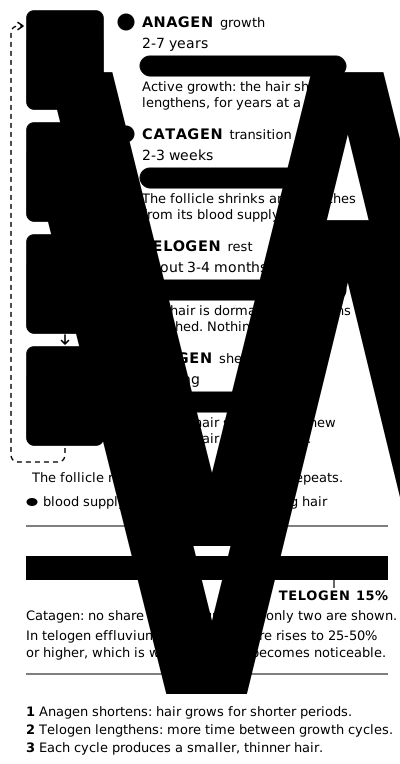
The Hair Growth Cycle#
| Phase | Name | Duration | What's Happening |
|---|---|---|---|
| Growth | Anagen | 2-7 years | Active hair production |
| Transition | Catagen | 2-3 weeks | Follicle shrinks |
| Rest | Telogen | 2-3 months | Hair ready to shed |
| Shedding | Exogen | Ongoing | Old hair falls out |
Why Results Take Months#
Treatment works by:
- Stopping damage (immediate but invisible)
- Allowing recovery (weeks to months)
- Producing new hair (months to years)
Each hair follicle operates independently, so improvement happens gradually across your scalp—not all at once.
Finasteride Results Timeline#
Here's what to expect month-by-month with finasteride.
The Detailed Timeline#
Day 1-7: Immediate DHT Reduction
- DHT levels drop 65% within 24 hours
- No visible changes
- Treatment is already working at the cellular level
Weeks 2-6: Possible Shedding Phase
- Some men notice increased hair fall
- Temporary and normal
- Sign that hair cycle is resetting
- Not everyone experiences this
Months 1-3: Foundation Building
- DHT levels stabilize at reduced levels
- Follicle miniaturization slows/stops
- Still no visible improvement for most
- Critical period—don't give up
Months 3-6: First Visible Results
- Most men see first improvements
- Hair feels thicker
- Shedding decreases
- New hair begins to emerge
Months 6-12: Significant Improvement
- Noticeable density increase
- Coverage improvement visible
- Photo comparison shows clear difference
- Full assessment possible
Months 12-24: Maximum Results
- Peak improvement achieved
- Hair count increases continue
- Better results at 24 months than 12
- Maintenance phase begins
Success Rates Over Time#
| Timeframe | Stops Hair Loss | Regrows Hair |
|---|---|---|
| 12 months | 83% (crown) | 65% |
| 24 months | 85%+ | 70%+ |
| 10 years | 99.1% | Maintained |
Minoxidil Results Timeline#
Minoxidil follows a different pattern than finasteride.
Month-by-Month Progression#
Weeks 1-4: Treatment Initiation
- Apply twice daily (topical) or once daily (oral)
- Blood flow to follicles increases
- No visible changes yet
- May notice scalp warmth or tingling
Weeks 2-8: The "Dread Shed"
- Increased hair shedding is common
- Can be alarming but is normal
- Old, weak hairs being pushed out
- Sign that treatment is working
Months 2-3: Shedding Subsides
- Hair fall returns to normal
- Follicles transitioning to growth phase
- Fine vellus hairs may appear
- Still early for visible results
Months 3-6: Early Regrowth
- Fine, light-colored hairs emerge
- Vellus hairs become more visible
- Some density improvement
- 4 months is typical for first results
Months 6-12: Visible Improvement
- Vellus hairs thicken and darken
- Density noticeably increases
- Coverage improves
- Most improvement occurs here
Months 12-18: Peak Results
- Maximum density achieved
- Terminal hair fully developed
- Full assessment possible
- Maintenance phase begins
Response by Location#
| Scalp Area | Response Rate | Time to Results |
|---|---|---|
| Crown/vertex | 65% | 6-12 months |
| Mid-scalp | 55-60% | 6-12 months |
| Hairline/frontal | 35% | 9-12+ months |
The Shedding Phase Explained#
Initial shedding worries many people—but it's usually a good sign.
What Is "Dread Shed"?#
The "dread shed" is the colloquial name for increased hair shedding that occurs 2-8 weeks after starting treatment. Medically, it's called "immediate telogen release."
Why It Happens#
| Mechanism | Explanation |
|---|---|
| Telogen shortening | Treatment accelerates the resting phase |
| Anagen stimulation | Growth phase starts faster |
| Weak hair pushed out | Old hairs shed to make way for new |
| Synchronized cycling | Follicles reset together |
Timeline#
| Phase | Timing | Duration |
|---|---|---|
| Onset | 2-4 weeks after starting | - |
| Peak shedding | Weeks 3-6 | - |
| Resolution | By 3-4 months | 2-8 weeks total |
Which Treatments Cause It#
Shedding can occur with:
- Minoxidil (most common)
- Finasteride (less common)
- Dutasteride
- PRP therapy
- Low-level laser therapy
What to Do#
- Don't panic - It's temporary
- Continue treatment - Stopping won't help
- Document progress - Take photos for comparison
- Wait it out - Usually resolves by month 4
- Consult doctor - If excessive or prolonged
Combination Therapy Timeline#
Using finasteride and minoxidil together may accelerate results.
Combined Treatment Progression#
| Month | What's Happening | Expected Changes |
|---|---|---|
| 1 | Both treatments active | Possible shedding |
| 2-3 | DHT blocked, growth stimulated | Shedding subsides |
| 4-6 | Synergistic effects begin | Early visible improvement |
| 6-9 | Significant improvement | Noticeable density |
| 9-12 | Near-maximum results | Full assessment |
| 12-24 | Peak results | Maximum improvement |
Combination Advantage#
| Treatment | 12-Month Improvement |
|---|---|
| Combination | 94% |
| Finasteride alone | 83% |
| Minoxidil alone | 59% |
Studies suggest combination therapy may show results earlier than either treatment alone.
Reduced Shedding Benefit#
Research indicates that combining finasteride with minoxidil may reduce the shedding phase—some studies show sustained improvement without the initial hair loss phase seen with minoxidil alone.
Setting Realistic Expectations#
Unrealistic expectations lead to early discontinuation.
What Treatment Can Do#
| Realistic | Unrealistic |
|---|---|
| Stop further loss | Restore full head of hair |
| Regrow some hair | Look like age 18 again |
| Improve density | Complete hairline restoration |
| Slow progression | Work overnight |
Typical Results by Stage#
| Starting Point | Realistic Expectation |
|---|---|
| Early loss (NW 2-3) | Maintain + noticeable regrowth |
| Moderate loss (NW 3-4) | Stabilize + some improvement |
| Advanced loss (NW 5-6) | Slow progression + modest gains |
| Severe loss (NW 7) | Maintenance focus |
The Numbers#
- 83% of men stop losing hair
- 65% regrow some hair
- 94% improve with combination
- Only ~15-20% see dramatic regrowth
How to Track Progress#
Proper tracking helps you assess whether treatment is working.
Photo Documentation Protocol#
Setup:
- Same lighting every time
- Same camera/phone distance
- Same angles (top-down, front, sides)
- Dry hair, same styling
Frequency:
- Baseline photos before starting
- Monthly photos for first 6 months
- Every 2-3 months thereafter
What to Compare:
- Hairline position
- Crown density
- Part line width
- Overall coverage
Hair Count Methods#
| Method | How It Works | Usefulness |
|---|---|---|
| Shower count | Count hairs in drain | Rough trend only |
| Comb count | Count hairs in comb | Rough trend only |
| Photo analysis | Compare density | Most reliable |
| Professional count | Trichoscopy | Most accurate |
Warning Signs vs. Normal Progress#
| Normal | Concerning |
|---|---|
| Early shedding (weeks 2-8) | Prolonged shedding (>4 months) |
| No visible change at 3 months | No change at 12 months |
| Slow, gradual improvement | Continued rapid loss |
| Variable day-to-day shedding | Patchy loss patterns |
When to Reassess Your Treatment#
Regular evaluation ensures you're on the right track.
Assessment Schedule#
| Timepoint | Action |
|---|---|
| 3 months | Compare photos, assess shedding |
| 6 months | Formal assessment, adjust if needed |
| 12 months | Full evaluation, consider changes |
| Annually | Ongoing maintenance review |
Decision Points#
At 6 Months:
- If improving: Continue current regimen
- If stable: Continue, consider adding treatment
- If still declining: Consult doctor, consider changes
At 12 Months:
- Stable or improved: Maintain current treatment
- No improvement: Consider adding treatments
- Continued loss: Evaluate alternatives (dutasteride, oral minoxidil)
When to Consider Changes#
| Situation | Possible Actions |
|---|---|
| Finasteride alone not enough | Add minoxidil |
| Minoxidil alone not enough | Add finasteride |
| Both not enough | Consider dutasteride |
| Topicals inconvenient | Consider oral minoxidil |
| Side effects | Switch to topical formulations |
What Affects How Fast You'll See Results#
Several factors influence your individual timeline.
Factors That Speed Results#
| Factor | Impact |
|---|---|
| Earlier stage hair loss | Better baseline |
| Consistent daily use | Maximum effect |
| Combination therapy | Synergistic effect |
| Good overall health | Optimal follicle function |
Factors That Slow Results#
| Factor | Impact |
|---|---|
| Advanced hair loss | Less to work with |
| Inconsistent use | Reduced effectiveness |
| Single treatment only | Addresses one mechanism |
| Poor nutrition/health | Suboptimal follicle function |
Individual Variation#
- Genetics influence response rate
- Age affects timeline (younger often responds better)
- Duration of loss matters (recent loss responds better)
- Some men are non-responders (~15-20%)
What Happens If You Stop Treatment#
Understanding the consequences helps maintain commitment.
Finasteride Discontinuation#
| Timeline | What Happens |
|---|---|
| Immediately | DHT levels begin rising |
| 1-2 months | Return to pre-treatment DHT |
| 3-6 months | Hair loss resumes |
| 6-12 months | Regained hair fully lost |
| 12+ months | Back to baseline or worse |
Minoxidil Discontinuation#
| Timeline | What Happens |
|---|---|
| Immediately | Blood flow normalization begins |
| 2-4 weeks | Shedding may increase |
| 2-3 months | Most treatment gains lost |
| 6+ months | Return to baseline |
The Bottom Line#
Both treatments require indefinite use to maintain results. Stopping means losing what you gained.
Dealing with Slow Progress#
What to do when results aren't meeting expectations.
Month 6 Check: Still No Results?#
Before worrying:
- Are you using treatment daily?
- Have you compared photos objectively?
- Are you expecting too much too fast?
If genuinely not responding:
- Consult your doctor
- Consider adding a second treatment
- Evaluate for alternative diagnoses
Month 12 Check: Minimal Improvement?#
Options to discuss with your doctor:
- Add minoxidil (if on finasteride alone)
- Add finasteride (if on minoxidil alone)
- Switch to dutasteride (stronger DHT blocker)
- Try oral minoxidil (may be more effective)
- Consider adjunct treatments (microneedling, PRP)
Non-Responders#
About 15-20% of men don't respond well to standard treatments:
- May need stronger options (dutasteride)
- May benefit from combination approaches
- May need to adjust expectations
- Hair transplant may be appropriate if stabilized
Special Timeline Considerations#
Different situations have different expectations.
Younger Users (Under 25)#
- May respond faster due to healthier follicles
- Earlier intervention = better outcomes
- Long-term commitment required
- More to preserve from the start
Older Users (Over 50)#
- Still beneficial for maintenance
- Results may be more modest
- Focus on stabilization
- Combination therapy often helpful
Advanced Hair Loss#
- Larger improvements possible (paradoxically)
- But starting from worse baseline
- Focus on density maintenance
- Consider transplant after stabilization
Long-Term Expectations#
What to expect over years of treatment.
Year 1-2#
- Maximum improvement typically achieved
- Hair count peaks around 24 months
- Establish maintenance routine
- Continue consistent use
Years 2-5#
- Maintain achieved results
- Slow, age-related thinning may continue
- Treatment remains effective
- Regular photo monitoring continues
Years 5+#
- Long-term studies show continued efficacy
- 10-year data: 99.1% maintain improvement
- May need to add treatments over time
- Periodic reassessment with doctor
The Long Game#
Hair loss treatment is a marathon, not a sprint:
- Patience is essential
- Consistency is critical
- Results compound over time
- Early quitters miss the benefits
Frequently Asked Questions#
How long does it take for finasteride to work?#
Finasteride starts reducing DHT within 24 hours (65% reduction), but visible results take 3-6 months. Full results are seen at 12-24 months. Don't assess effectiveness until at least 6 months of consistent use.
Why is my hair falling out after starting treatment?#
Initial shedding ("dread shed") affects many people and is actually a good sign. It occurs 2-8 weeks after starting and resolves by 3-4 months. It means treatment is resetting your hair growth cycle.
When should I give up on treatment?#
Give treatment at least 12 months before concluding it doesn't work. At 12 months with no improvement, discuss alternatives with your doctor rather than stopping entirely.
Will my hair grow back faster with combination treatment?#
Studies suggest combination therapy may show results earlier and achieves better outcomes (94% vs 83% or 59% alone). Synergistic effects may reduce the shedding phase as well.
How long until I see maximum results?#
Maximum results typically occur at 18-24 months, though some men see continued improvement beyond this. Hair count studies show better results at 24 months than 12 months.
What happens if I miss doses?#
Occasional missed doses are unlikely to affect results significantly. However, consistent daily use provides maximum benefit. If you frequently miss doses, results will be compromised.
Is it normal to see no change at 3 months?#
Yes, completely normal. Most men don't see visible improvement until 3-6 months. The treatment is working even if you can't see it yet—don't give up.
How do I know if treatment is working?#
Compare standardized photos taken monthly. By 6 months, you should see reduced shedding and early density improvements. By 12 months, photo comparison should show clear difference.
References
- PMC. "Combating 'dread shed': The impact of overlapping topical and oral minoxidil." 2024.
- PubMed. "Immediate telogen release with minoxidil initiation." 2024.
- GoodRx. "How Long Does Finasteride Take to Work?" 2024.
- GoodRx. "Finasteride Shedding: Why It Happens and How Long It Lasts." 2024.
- Hims. "Finasteride Results Timeline: What to Expect." 2024.
- Wimpole Clinic. "Finasteride Results: Timeline, Photos, Before & After." 2024.
- Manual. "How Long Does Finasteride Take to Work?" 2024.
- Oxford Online Pharmacy. "When will I see results from Finasteride or Minoxidil?" 2024.
- Sons UK. "Expectations vs Reality: A Hair Regrowth Timeline." 2024.
- Compare Mens Care. "Minoxidil Results Timeline: Month-by-Month Guide." 2025.
Article ID: T10 | Category: Treatments | Last Updated: 2026-01-11