Hair Transplant FUE vs FUT: Complete Comparison (2026)
2,649 words·Compiled from cited medical literature·Not medical advice
On this page 13 sections
- Who This Is For
- What Are FUE and FUT?
- The Clinical Evidence: Graft Survival Rates
- Cost Comparison: Investment Analysis
- Scarring: The Visible Difference
- Recovery Timeline Comparison
- Graft Capacity: How Many Can You Get?
- Who Is the Ideal Candidate for Each?
- Combining FUE and FUT
- Questions to Ask Your Surgeon
- Post-Transplant Care and Maintenance
- Frequently Asked Questions
- The Bottom Line
Who This Is For#
This guide is for you if:
- You're considering hair transplant and want objective comparison
- You need to understand which technique suits your situation
- You want to know realistic costs and recovery expectations
- You're concerned about scarring and want the facts
- You're planning for maximum long-term results
This guide is NOT for you if:
- You have inadequate donor hair density
- You have active scalp conditions or infections
- You're looking for a quick cosmetic fix without research
- You have unrealistic expectations about results
- You're unwilling to maintain results with medical therapy
What Are FUE and FUT?#
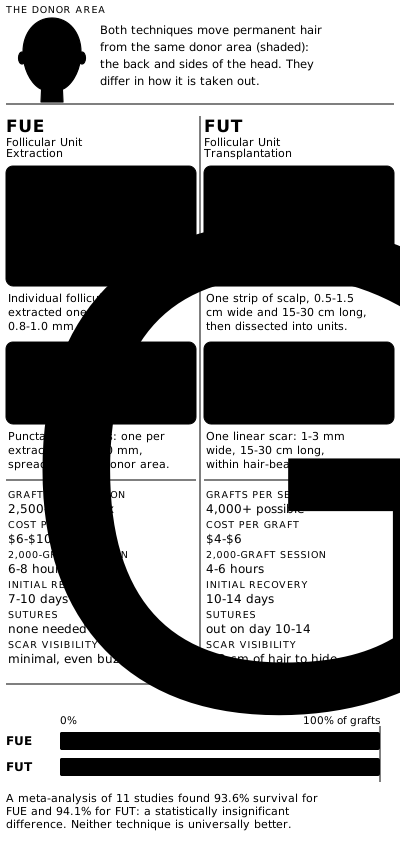
Both FUE and FUT are modern hair transplant techniques that move permanent hair from donor areas (typically the back and sides of the head) to balding areas. The fundamental difference lies in how grafts are harvested.
FUE (Follicular Unit Extraction): Individual follicular units are extracted one-by-one using small punches (0.8-1.0mm diameter). No scalpel incision, no linear scar.
FUT (Follicular Unit Transplantation): A strip of scalp (0.5-1.5cm wide, 15-30cm long) is surgically removed, then dissected under microscopes into individual follicular units. Leaves a linear scar.
Understanding the Core Difference#
The extraction method defines everything else. FUE's individual extraction means:
- More time-intensive (each graft extracted separately)
- No linear scar (only tiny dot scars)
- Limited grafts per session (donor overharvesting risk)
- Higher cost (more labor-intensive)
FUT's strip method means:
- Faster graft harvesting
- More grafts possible per session
- Linear scar requiring hair coverage
- Lower cost per graft
- Grafts exclusively from "safe donor zone"
Neither technique is universally better—each has trade-offs that matter differently to different patients.
The Clinical Evidence: Graft Survival Rates#
Let's start with what matters most: do the transplanted grafts actually survive?
Meta-Analysis Results#
A meta-analysis of 11 studies provides the most reliable comparison:
- FUE mean survival: 93.6%
- FUT mean survival: 94.1%
- Statistical significance: None (p>0.05)
This is critical data. Both techniques achieve essentially identical graft survival when performed by skilled surgeons. The less than 0.5% difference is statistically meaningless.
Additional Clinical Evidence#
A study published in Hair Transplant Forum International comparing 2,000+ graft procedures found less than 2.7% difference between the two techniques. Another analysis noted FUT success rates sometimes reaching 98% due to the controlled dissection environment.
What This Means for You#
The graft survival data tells us something important: the technique matters less than the surgeon's skill. Both FUE and FUT can achieve excellent results. Your decision should focus on other factors—scarring, cost, recovery, and graft needs—not survival rate differences.
Cost Comparison: Investment Analysis#
Hair transplant is a significant financial investment. Understanding the cost structure helps with planning.
Cost Breakdown#
FUE Costs:
- Per graft: $6-$10
- Typical procedure (1,500-3,000 grafts): $7,000-$15,000
- Large procedures (3,000+ grafts): $15,000-$25,000+
- Average USA cost: $7,000-$12,000
FUT Costs:
- Per graft: $4-$6
- Typical procedure (2,000-4,000 grafts): $4,000-$15,000
- Large procedures (4,000+ grafts): $10,000-$20,000
- Average USA cost: $6,000-$10,000
Why FUE Costs More#
FUE is more labor-intensive. Each graft requires individual extraction, alignment, and extraction motion. A 2,000-graft FUE procedure takes 6-8 hours; FUT with the same graft count takes 4-6 hours. Surgeon time = cost.
Value Assessment#
Choose FUT for value when:
- You need 3,000+ grafts
- Budget is a primary concern
- You're comfortable with longer hair covering a scar
- Multiple procedures are likely needed
Choose FUE for value when:
- You want to wear hair short
- Graft needs are moderate (under 2,500)
- You're willing to pay premium for no linear scar
- Single procedure is likely sufficient
Important: Insurance does not cover hair transplants. This is considered elective cosmetic surgery. Budget accordingly.
Scarring: The Visible Difference#
Scarring is often the deciding factor for many patients.
FUE Scarring Profile#
What to expect:
- Punctate (dot) scars at each extraction site
- Size: 0.8-1.0mm diameter each
- Distribution: Scattered across donor area
- Visibility: Minimal, even with very short hair (buzz cut)
- Healing: Typically imperceptible at 2-3 weeks
Reality check: With 2,000 FUE grafts, you'll have 2,000 tiny dot scars. In aggregate, this can create a slightly "moth-eaten" appearance in the donor area if too many grafts are extracted. This is why FUE sessions are limited—overharvesting creates visible thinning.
FUT Scarring Profile#
What to expect:
- Single linear scar
- Width: 1-3mm (typically 1-2mm with good technique)
- Length: 15-30cm depending on graft needs
- Location: Concealed within hair-bearing scalp
- Hair required to hide: 2-3cm minimum
Reality check: FUT leaves a permanent line. However, with trichophytic closure technique, hair can grow through the scar, minimizing visibility. Many patients have virtually invisible FUT scars. Others have wider, more visible scars depending on healing and surgical technique.
The Hybrid Approach#
Some surgeons advocate combining techniques: use FUT to harvest maximum high-quality grafts from the safe donor zone, then supplement with FUE if more coverage is needed. This preserves donor density while maximizing graft availability.
Recovery Timeline Comparison#
Recovery affects your daily life. Here's what to expect.
FUE Recovery#
Days 1-3: Swelling, tenderness at extraction sites. Some patients experience forehead swelling.
Days 4-7: Scabbing forms around transplanted grafts. Extraction sites largely healed. Many patients return to work.
Days 7-10: Most scabbing falls off naturally. Can resume most normal activities.
Weeks 2-4: Donor area fully healed. Avoid strenuous exercise until week 3.
Summary: 7-10 days initial recovery, 3 weeks to full activity
FUT Recovery#
Days 1-3: More significant discomfort due to linear incision. Swelling common. Tight sensation at donor site.
Days 4-7: Incision healing progresses. Sutures/staples remain in place. Movement may feel restricted.
Days 10-14: Sutures/staples removed. Most patients return to work after removal.
Weeks 2-4: Linear scar continues maturing. Avoid strenuous activity until week 4.
Summary: 10-14 days initial recovery, 4 weeks to full activity
Key Recovery Differences#
| Factor | FUE | FUT |
|---|---|---|
| Return to work | 5-7 days | 7-10 days |
| Suture removal | None needed | Day 10-14 |
| Exercise resumption | Week 2-3 | Week 3-4 |
| Pain level | Mild | Moderate |
| Sleeping position | Any (after day 2) | Careful (avoid pressure on scar) |
Graft Capacity: How Many Can You Get?#
Your hair loss extent determines how many grafts you need—and this affects technique choice.
Session Capacity Comparison#
FUE per session: 2,500-3,000 grafts maximum
- Limited by overharvesting risk
- Donor area must remain natural-looking
- Extracting too many creates visible thinning
- May require multiple sessions for extensive baldness
FUT per session: 4,000+ grafts possible
- Strip removal allows maximum harvest
- Grafts come exclusively from safe donor zone
- Single session can address significant baldness
- Efficient use of donor resources
Lifetime Donor Supply#
FUE consideration: Every extraction creates a small scar. Over multiple procedures, the donor area can become depleted or develop a visible "dotted" appearance if limits aren't respected.
FUT consideration: Multiple FUT procedures are possible, but each adds to the linear scar length/width. However, FUT is considered more efficient at extracting maximum lifetime grafts from the safe donor zone.
Matching Needs to Technique#
Norwood 2-3 (moderate baldness):
- 1,500-2,500 grafts typically needed
- Either technique works well
- FUE often preferred for flexibility
Norwood 4-5 (significant baldness):
- 3,000-4,500 grafts typically needed
- FUT may be more efficient
- Combination approach possible
Norwood 6-7 (extensive baldness):
- 5,000+ grafts may be needed
- Multiple sessions likely required
- FUT offers better donor efficiency
- Realistic expectations essential
Who Is the Ideal Candidate for Each?#
Understanding candidacy helps make the right choice.
Ideal FUE Candidates#
Best suited for:
- Patients who wear hair very short or shaved
- Athletes, military, first responders (short hair requirements)
- Those wanting minimal visible scarring
- Smaller procedures (under 2,500 grafts)
- Patients with very tight scalps (not ideal for strip removal)
- Younger patients who may want flexibility for future procedures
- Those prioritizing faster recovery
Considerations:
- Higher cost acceptance
- Potentially multiple sessions for extensive loss
- Understanding that many small scars still exist
Ideal FUT Candidates#
Best suited for:
- Patients comfortable wearing hair 2-3cm or longer
- Those needing maximum grafts in one session
- Patients with extensive baldness (Norwood 4+)
- Budget-conscious patients
- Those prioritizing graft quality (controlled dissection)
- Patients planning multiple procedures (efficient donor use)
- Those with good scalp laxity (skin flexibility)
Considerations:
- Acceptance of linear scar
- Longer recovery time
- Suture removal required
Combining FUE and FUT#
Many modern surgeons use both techniques strategically.
Combination Strategies#
Sequential approach:
- Start with FUT for maximum safe-zone grafts
- Later, use FUE to fill remaining areas or add density
- Preserves donor efficiency while maintaining options
Same-session combination:
- FUT for primary grafts (front/crown)
- FUE for additional grafts or temple refinement
- Maximizes single-session results
Scar camouflage:
- If previous FUT scar is visible
- FUE can transplant hair into/around scar
- Creates effective concealment
Why Combination Works#
Different techniques have different strengths. Using both allows surgeons to maximize results while minimizing limitations of each approach.
Questions to Ask Your Surgeon#
Before choosing, have these conversations.
Essential Questions#
About experience:
- How many FUE/FUT procedures have you performed?
- Can I see before/after photos of similar cases?
- What is your graft survival rate?
- Do you perform both techniques?
About your case:
- Which technique do you recommend for my situation and why?
- How many grafts do I need?
- What results can I realistically expect?
- Will I likely need future procedures?
About the procedure:
- Who performs the graft extraction/placement?
- What technology do you use?
- What is the expected recovery timeline?
- What post-operative care is required?
About cost:
- What is the total cost including all fees?
- What does the fee include?
- What are the costs for follow-up care?
- Do you offer financing options?
Post-Transplant Care and Maintenance#
Both techniques require similar aftercare and ongoing maintenance.
Post-Operative Care#
First 2 weeks:
- Sleep elevated to minimize swelling
- Gentle washing as instructed (typically day 2-3)
- Avoid touching/scratching transplanted area
- No exercise, swimming, or sun exposure
- Avoid alcohol and smoking
Weeks 2-4:
- Scabs fall off naturally
- Resume normal washing
- Light exercise okay
- Continue avoiding sun exposure
Months 1-3:
- Transplanted hair sheds (normal—"shock loss")
- New growth begins around month 3
- Continue any prescribed medications
Long-Term Maintenance#
Transplanted hair is permanent, but hair loss can continue in non-transplanted areas. Maintenance typically includes:
Medical therapy:
- Finasteride or dutasteride to protect non-transplanted hair
- Minoxidil for added density support
- Consider low-level laser therapy
Future procedures:
- Many patients benefit from additional sessions
- Plan for potential touch-ups in 5-10 years
- Donor supply must be managed carefully
Frequently Asked Questions#
Which technique is better, FUE or FUT?#
Neither is universally better. Meta-analysis shows nearly identical graft survival rates (93.6% FUE vs 94.1% FUT). The "better" technique depends on your hair loss extent, lifestyle, scarring preferences, and budget. FUE offers no linear scar but costs more. FUT provides more grafts per session at lower cost but leaves a linear scar.
How much does hair transplant cost?#
FUE typically costs $6-$10 per graft ($7,000-$15,000 for typical procedures). FUT costs $4-$6 per graft ($6,000-$10,000 typical). Extensive baldness requiring 4,000+ grafts can cost $15,000-$25,000+. Insurance does not cover hair transplants.
How long is recovery?#
FUE: 7-10 days initial recovery, return to work in 5-7 days, full activities at 2-3 weeks. FUT: 10-14 days initial recovery, return to work in 7-10 days (after suture removal), full activities at 3-4 weeks.
Will my transplant be visible to others?#
During recovery (1-2 weeks), redness and scabbing are visible. After healing, transplanted hair is undetectable—it's your own hair growing naturally. FUE donor scars are virtually invisible. FUT scar requires 2-3cm hair length to cover.
How many grafts do I need?#
Depends on your baldness extent. Norwood 2-3: 1,500-2,500 grafts. Norwood 4-5: 3,000-4,500 grafts. Norwood 6-7: 5,000+ grafts. A consultation with measurements determines your specific needs.
Can I have multiple transplants?#
Yes, but donor supply is finite. FUT is considered more donor-efficient for lifetime planning. Most patients can have 2-3 procedures over their lifetime. Planning with a skilled surgeon ensures optimal donor management.
When will I see results?#
Transplanted hair sheds at weeks 2-4 (normal). New growth begins at months 3-4. Visible improvement at months 6-8. Full results at 12-18 months.
Do transplanted hairs fall out?#
Transplanted hair sheds initially (shock loss), then grows back permanently. The grafts come from DHT-resistant areas and maintain that resistance in their new location. Graft survival rates of 90-98% mean the vast majority of transplanted hair is permanent.
The Bottom Line#
FUE and FUT are both excellent hair transplant techniques with comparable graft survival rates. Your choice should be based on practical factors:
Key takeaways:
- Survival rates are equivalent: 93.6% FUE vs 94.1% FUT—no meaningful difference
- FUE advantages: No linear scar, faster recovery, can wear hair short
- FUT advantages: More grafts per session, lower cost, efficient donor use
- Cost difference matters: FUE is 30-50% more expensive per graft
- Surgeon skill matters most: Either technique succeeds with experienced hands
- Long-term planning essential: Consider future procedures and donor preservation
Best for FUE: Those wanting no visible scar, shorter recovery, and moderate graft needs.
Best for FUT: Those needing maximum grafts, prioritizing value, and comfortable with longer hair.
For many patients: A combination approach using both techniques strategically delivers optimal lifetime results.
Consult with a board-certified hair restoration surgeon who performs both techniques. The best surgeons recommend based on your individual needs—not just what they specialize in.
References
- PubMed (2024). Follicular Unit Graft Survival After Hair Transplant for Alopecia
- ISHRS Hair Transplant Forum (2023). FUT vs. FUE Graft Survival: A Side-by-Side Study
- ISHRS (2024). Clinical Practice Guidelines for Follicular Unit Transplantation
- ISHRS Hair Transplant Forum (2023). FUE vs. FUT-MD: Study of 1,780 Follicles
- ISHRS (2024). FUE vs FUT and Maximizing the Hair Graft
- Bernstein Medical (2024). FUE vs FUT Hair Transplants: What's the Difference?
- ISHRS (2024). FUT Hair Transplant: Benefits, Procedure & Recovery
- World Medical Tourism (2025). Hair Transplant Success Rate Guide
- Hair Restoration Houston (2025). Hair Transplant Cost: Everything You Need to Know
- Hairman (2025). The Complete FUE Hair Transplant Guide
Medical Disclaimer: This article is for informational purposes only and does not constitute medical advice. Consult a board-certified hair restoration surgeon before pursuing hair transplant surgery. Individual results vary based on hair loss pattern, donor characteristics, and surgeon skill.