
The Snapshot
Efficacy Score: 8.3/10
Cost: Low–Moderate
Risk: Moderate (improper technique increases risk substantially)
What it works for:
• Androgenetic Alopecia (AGA) — strong evidence
• Alopecia Areata — limited + experimental
• Scarring Alopecias — not recommended unless supervised by a dermatologist
The Mechanism: How Microneedling Promotes Hair Growth
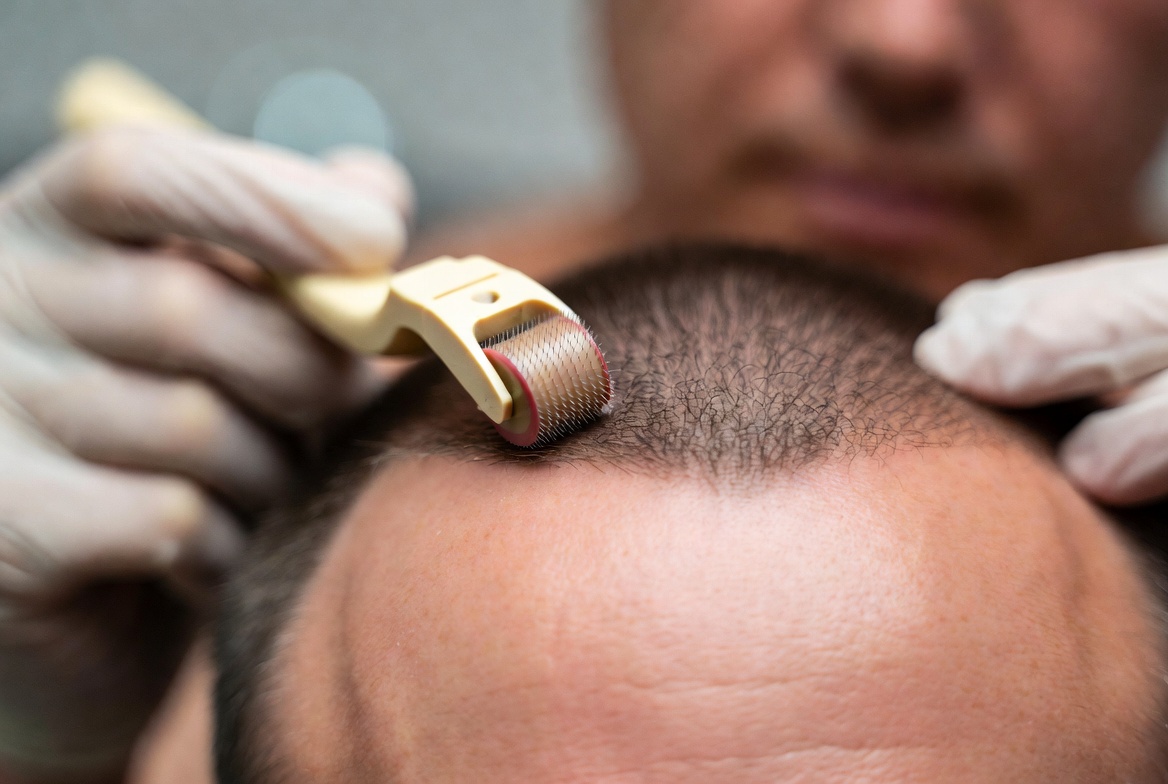
Microneedling creates controlled micro-injuries in the scalp that trigger a localized wound-healing cascade. The key biological effects:
Upregulation of Growth Factors:
Micro-injury stimulates PDGF, VEGF, IGF-1 — all associated with follicular stem cell activation (Dhurat et al., 2013).Wnt/β-Catenin Pathway Activation:
This is the master signaling pathway that transitions follicles from telogen → anagen (Faghihi et al., 2020).Enhanced Transdermal Delivery of Topicals:
Microneedling increases absorption of minoxidil by up to 3–5×, improving outcomes (Zymberg et al., 2022).Dermal Papilla Stimulation:
Microchannels increase fibroblast activity and collagen remodeling around miniaturized follicles.
Bottom line: Microneedling is not simply “causing inflammation.” It is triggering a controlled regenerative pathway that supports follicle recovery.
The Data: What Clinical Studies Actually Show
1. Microneedling + Minoxidil Outperforms Minoxidil Alone
Dhurat et al., 2013 (n=100):
• 5% minoxidil + weekly microneedling vs. 5% minoxidil alone
• Result: The microneedling group achieved ~4× higher mean hair count increase.
This is the landmark study that ignited clinical interest.
2. Needle Length Matters
Faghihi et al., 2020:
• Compared multiple lengths (0.5 mm, 1.0 mm, 1.5 mm)
• Result: 1.0–1.5 mm produced significantly stronger hair density improvements.
Shorter lengths (0.25–0.5 mm) show limited effect for hair growth but may enhance topical absorption.
3. Frequency: Weekly or Bi-weekly Works Best
Studies consistently show that:
• Weekly microneedling (1.0–1.5 mm)
• OR bi-weekly microneedling
→ produces superior results compared to daily or every-other-day use, which causes excess inflammation and reduces efficacy.
4. Combination Therapies
✓ Minoxidil: Best synergy
✓ Finasteride (topical): Improved penetration
✓ PRP: Microneedling may enhance PRP outcomes
✗ Dutasteride Injections: Microneedling adds no additional benefit
Add Your Heading Text Here

The Protocol: Optimal Needle Length & Frequency
1. Choose the Correct Needle Length
| Goal | Needle Length | Frequency |
|---|---|---|
| Maximize hair growth | 1.0–1.5 mm | Weekly or every 10–14 days |
| Improve absorption only | 0.25–0.5 mm | 2–3× per week |
| Sensitive scalps | 0.5–1.0 mm | Weekly |
Do NOT use 1.5 mm more than once weekly.
2. Step-by-Step Protocol (1.0–1.5 mm)
Before Treatment
• Stop minoxidil 24 hours prior
• Clean scalp thoroughly
• Disinfect roller/pen with 70% isopropyl alcohol
During Treatment
• Roll/press in six directions: vertical, horizontal, diagonal (both ways)
• Target pressure: mild pinpoint bleeding is acceptable but not required
• Total active time: 8–12 minutes
After Treatment (Critical)
• Avoid minoxidil for 24 hours
• Avoid hair fibers, sweat, and direct sun
• Use a simple post-treatment barrier: sterile saline or hyaluronic acid serum
When to Add Minoxidil
Resume 24 hours post-treatment (or 48 hours if scalp remains irritated).
3. Warning Signs (Stop Immediately)
• Excessive bleeding
• Pustules or infection
• Persistent redness >48 hours
• Worsening shedding after 6–8 weeks (beyond normal “activation shed”)
Verdict: Professional Assessment
Microneedling is one of the most effective non-drug adjunct therapies for AGA when performed correctly and combined with minoxidil. The evidence is consistent across multiple trials: needle lengths between 1.0–1.5 mm, applied weekly, produce meaningful improvements in density, caliber, and anagen–telogen ratio.
However:
• Technique matters more than the device.
• Overuse reduces efficacy.
• Poor hygiene increases risk significantly.
For most users, a weekly 1.0 mm session + daily minoxidil offers the best balance of results, safety, and sustainability.